A walk in Collserola
To the north of Barcelona we’re sheltered by Collserola Park, where you can enjoy a whole range of walking and cycling routes out in nature.
Today I’m going to talk about a walk of around 3 hours through this leafy park.
We’ll start by taking the FGC train (Ferrocarrils de la Generalitat) towards Terrassa or Sabadell and getting off at Baixador de Vallvidrera (careful: check that your train stops at every station). Once you’re there, you’ll already be breathing in the smell of the forest! 🙂
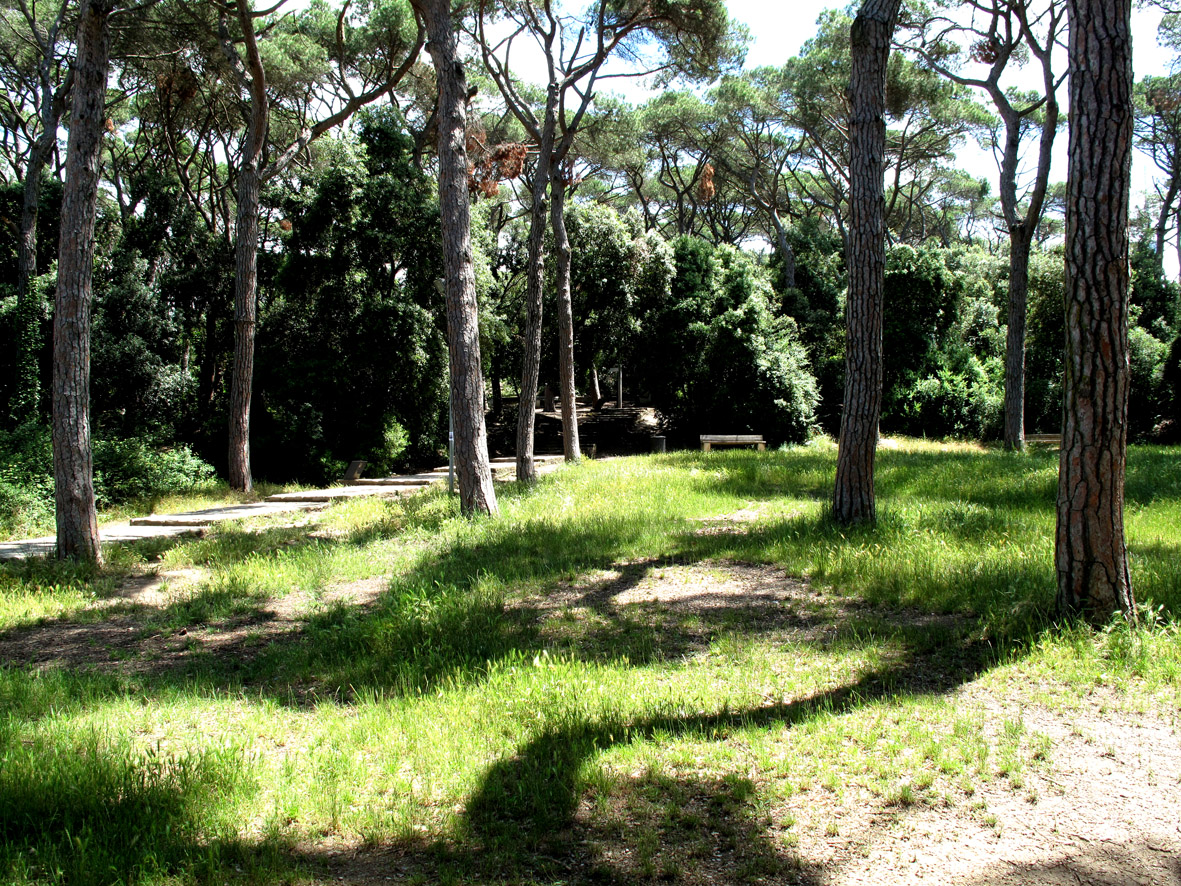 We go down the steps and cross the road, taking the ‘Camí del Pantà’ on the left, and carry straight on to the next fork, where we turn right (there’s a sign saying ‘torrent del rovelló’). We keep going straight along that path until we reach the reservoir, opened in 1864 to supply Sarrià with water through the Mina Grott, a mine you’ll come across a few metres before the reservoir, on your left. Once you’ve reached the reservoir, you can walk all the way round it through lush vegetation, with every kind of plant labelled with its own little sign, and surrounded by the croaking of frogs, each one louder than the last!
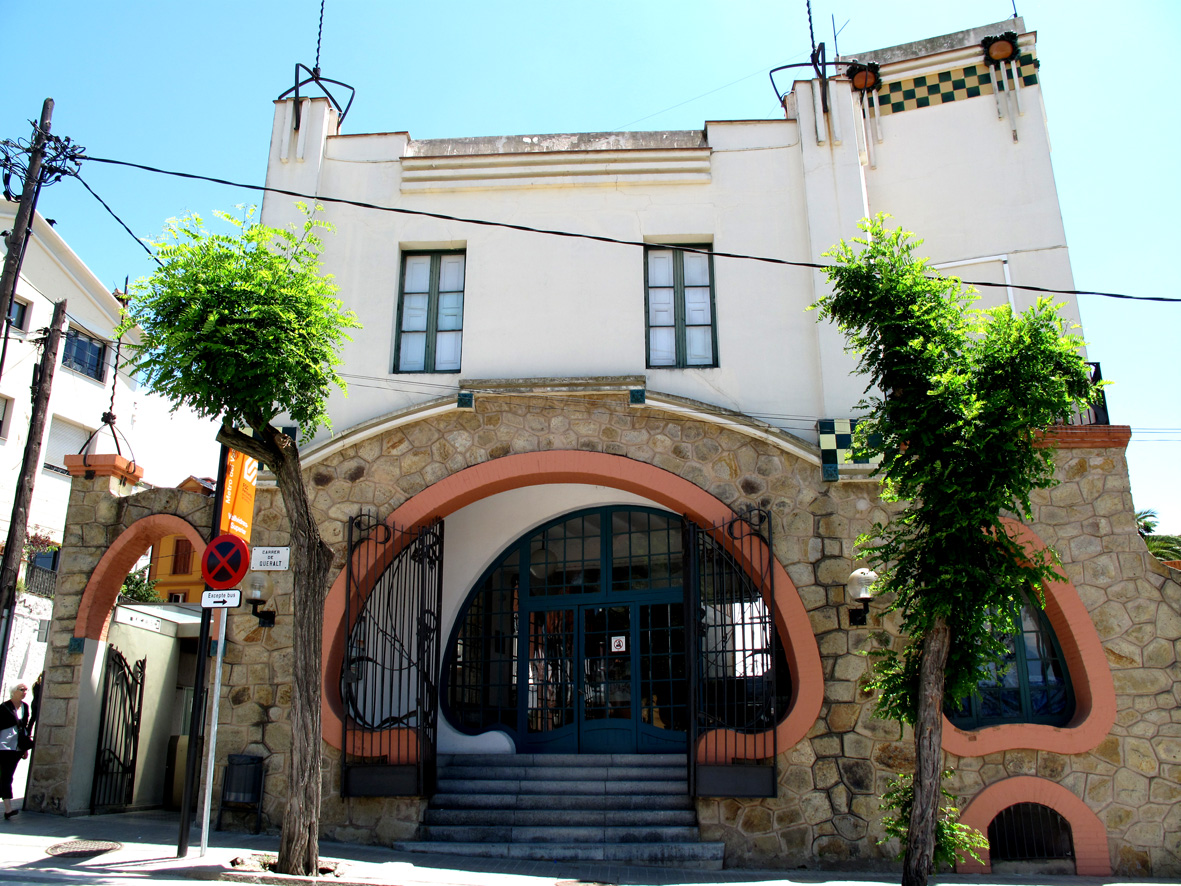
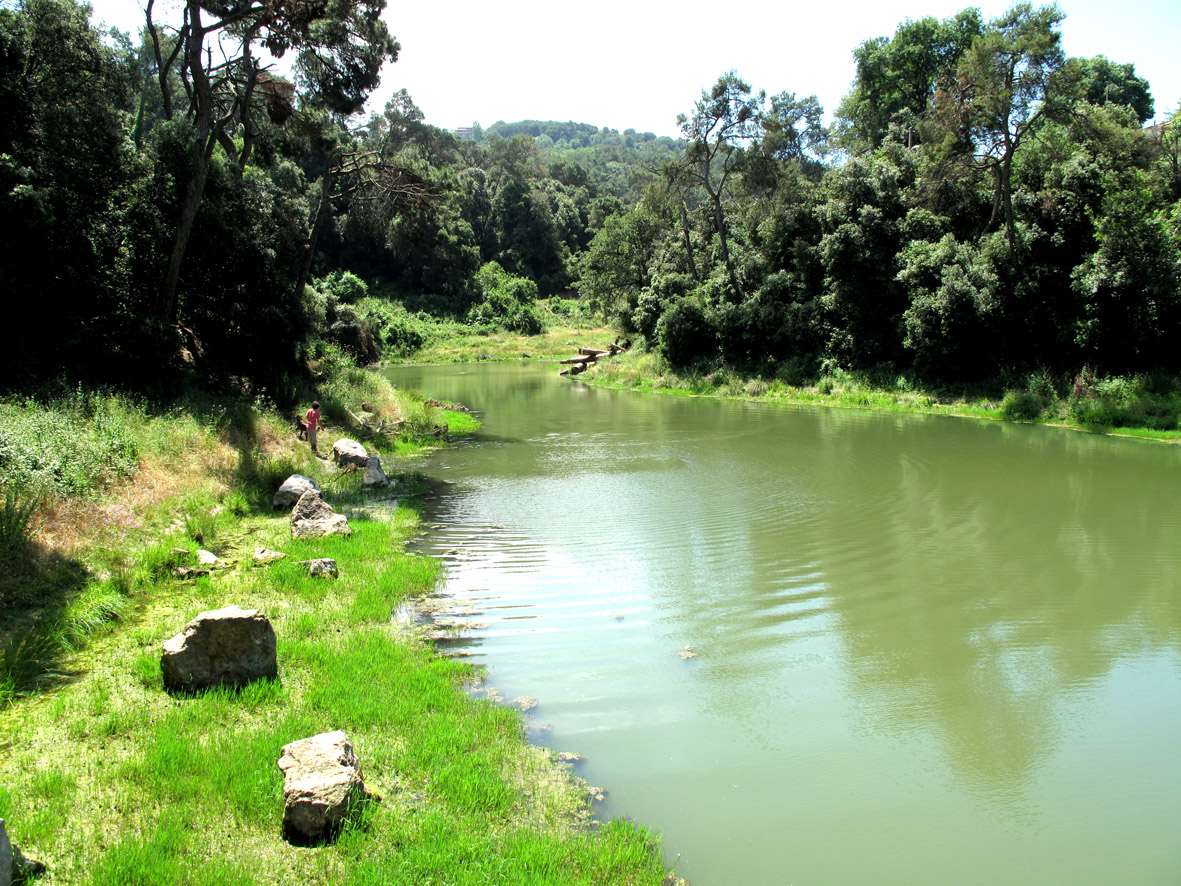 Once you’ve seen the reservoir, head back to the point where you arrived (where you can cross the wall) and turn off onto the path on the right, that is, the one above the path you came in on, with a rather steep little climb. When you come to a fork, take Carrer dels Reis Catòlics and carry straight on (some stretches are tarmacked) until you reach Plaça de Vallvidrera. In this little square is the Casa Trampa restaurant, where we’ll stop for lunch on our way back. From there, go up a first flight of steps to a small park; if you lean over the railing on your left, you’ll see a row of Modernista (Catalan Art Nouveau) houses. In the same square, on the right, is the funicular, in a building that’s also Modernista. That’s where we’ll end the route later on, but not yet! We keep climbing the steps, carry straight on along Camí dels Algarves and reach Carrer de les Alberes, where we turn left. Then we turn left again, not at the first street but at the second, Carrer de Can Basseda, and follow this road straight on until we reach a junction, where we carry on along Carrer de Gabriel Ferrater until we get to Carrer de la Budellera.
As we enter the Parc de la Budellera (also part of the Collserola range), a statue of a pilgrim welcomes us.
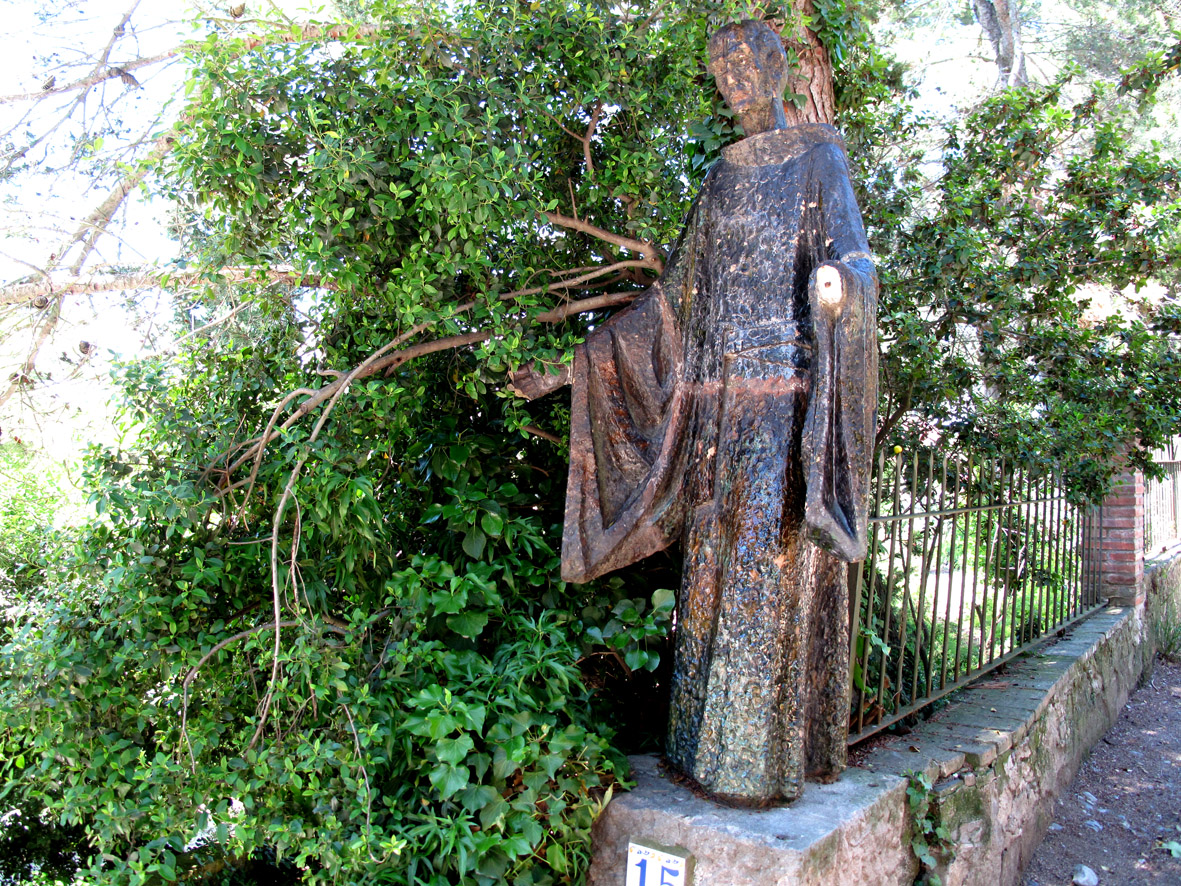
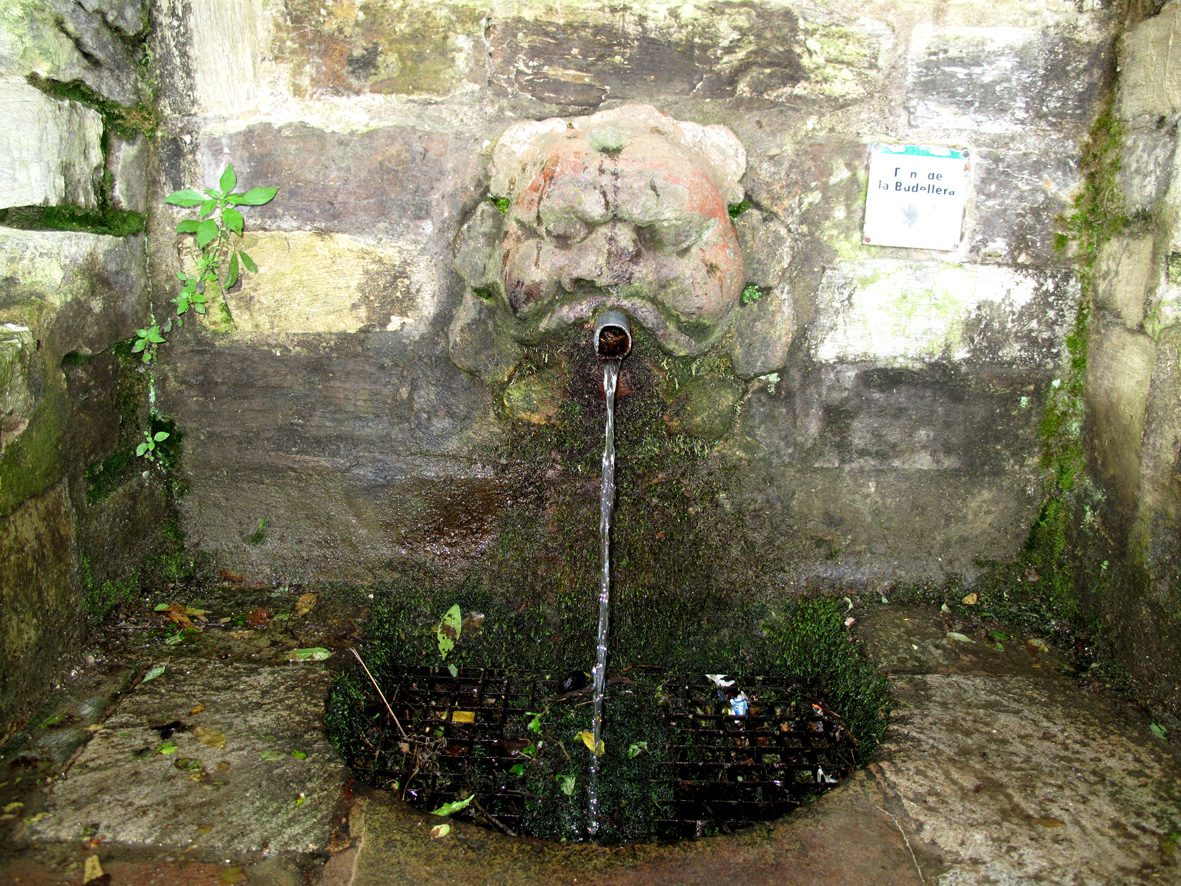
Once inside, there are 3 paths to choose from. My recommendation is to take the one on the left and walk up to the Font de la Budellera, a fountain by Jean-Claude Nicolas Forestier, built in 1918. You reach it up some stone steps and, along certain stretches, you can enjoy views of Collserola Park with Tibidabo in the background. Although they don’t guarantee that the water from the fountain is drinkable, there’s no harm in splashing a little on your face to cool down.
Heading back the way we came, I’d recommend returning to the Plaça de Vallvidrera and having lunch at Casa Trampa. Their meatballs are one of a kind, and the plate of Jabugo ham, at €17, is very good with the traditional pan con tomate (bread rubbed with tomato).
To get back to the city, as I mentioned earlier, we climb the steps again to take the funicular (which dates back to 1906) down to Peu del Funicular train station. Before you take the funicular, though, you can go up to the top of the station for another view of Barcelona.
If you like walking, I’d encourage you to do this route! You won’t regret it! 🙂
More photos of Barcelona on Instagram: @anotherbcn