Vallvidrera's Marquis and Marquise of Saint-Innocent
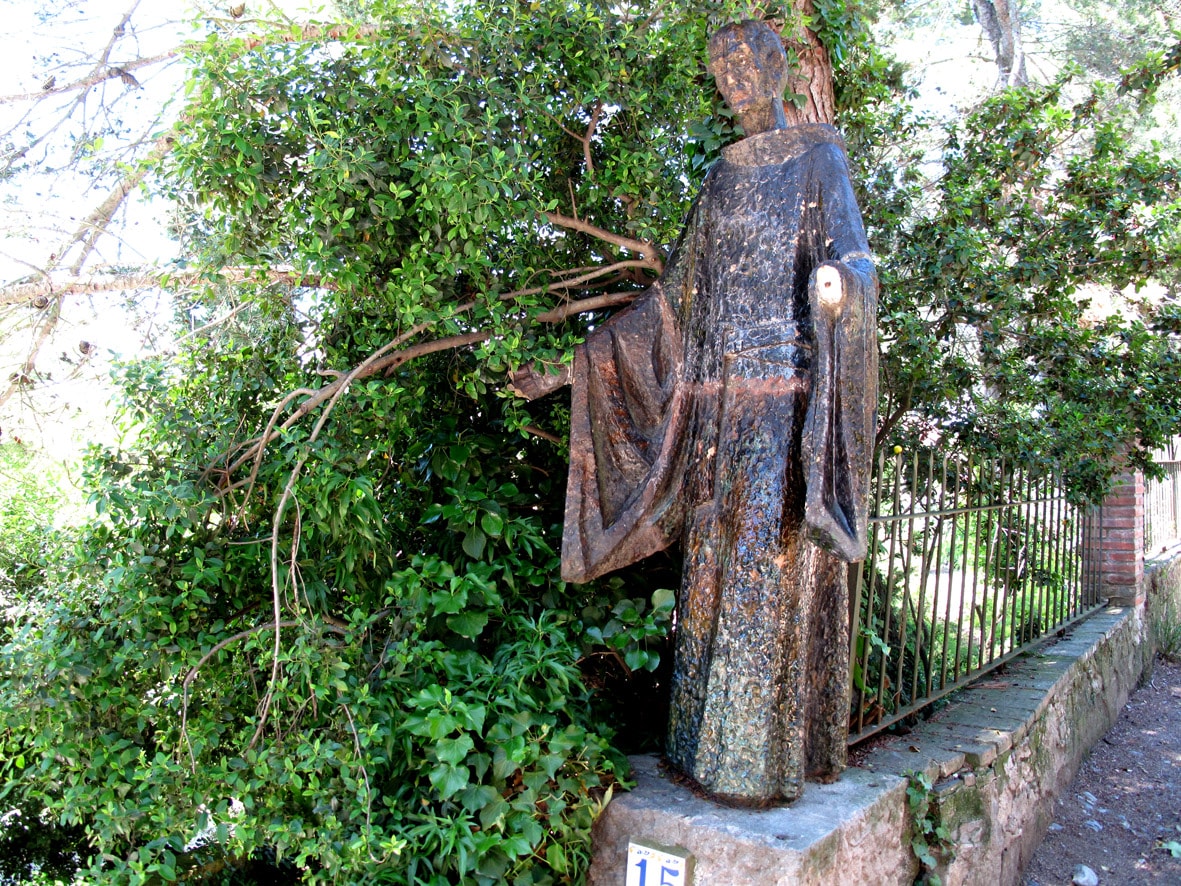
On the path to the Font de la Budellera, in Vallvidrera, a ceramic pilgrim welcomes you with open arms. Lots of people know him as Saint Francis, but he has the face of Woodland Kahler, the American who lived in the masia (old farmhouse) next door with his wife, Olga. In Vallvidrera they were known as the Marquis and Marquise of Saint-Innocent.
I’ve already told you about him in my post on the Font de la Budellera, but now an article about them by Xavier Gonzàlez Sanz has come out in La Vall de Vidre, the Vallvidrera residents’ magazine, and I can’t resist sharing what I know, because my father saw them when he was little: my grandparents had a house in Vallvidrera.
An eccentric couple
He was a writer and banker, and president of the International Vegetarian Union; she was a Russian baroness who had fled the Revolution. They inherited the title from an old friend of Olga’s in Paris, whom they took into their home when she was about to be thrown out of the hotel where she lived. When they arrived in Vallvidrera they lived for a while at the village hotel, and then bought La Budellera, which they called ‘the castle’.
When exactly isn’t clear: the article says 1962, for ten million pesetas, and the City Council’s catalogue entry says the late fifties. By October 1963 La Vanguardia was already reporting that they lived there. My father says the masia, old and beautiful, was falling apart, and that they rebuilt it. When he was little, he kept asking his grandfather, my great-grandfather, to buy it.
‘Eran unos tipos peculiares y excéntricos’ (they were odd, eccentric characters), my father tells me. People said he was Texan, and he was: he’d been born in Dallas. As for her, my father says she had been a circus dancer and equestrienne.
She dressed in black, in a traje cordobés (the Andalusian riding outfit), to ride a black horse, and he rode a white one, dressed in white with a cowboy hat. The black one must have been Admiral, a Black Morgan that, according to the article, was the only one in Europe.
The white one was the horse that played Babieca in El Cid, the Charlton Heston film, and how it ended up in Vallvidrera depends on who you ask. According to the article, Olga gave it to Woodland after pestering the producer, Samuel Bronston, until she got it. According to the City Council’s catalogue, it belonged to the former ambassador Henry Cabot Lodge, and she gave it to her husband in 1965. And the Marquis himself said in 1968 that he had bought it once filming was over. He said so when the couple gave the city a bronze head of Babieca, as a tribute to the mounted municipal police. It was unveiled on Saint Francis’s Day at the Camp de la Foixarda, on Montjuïc.
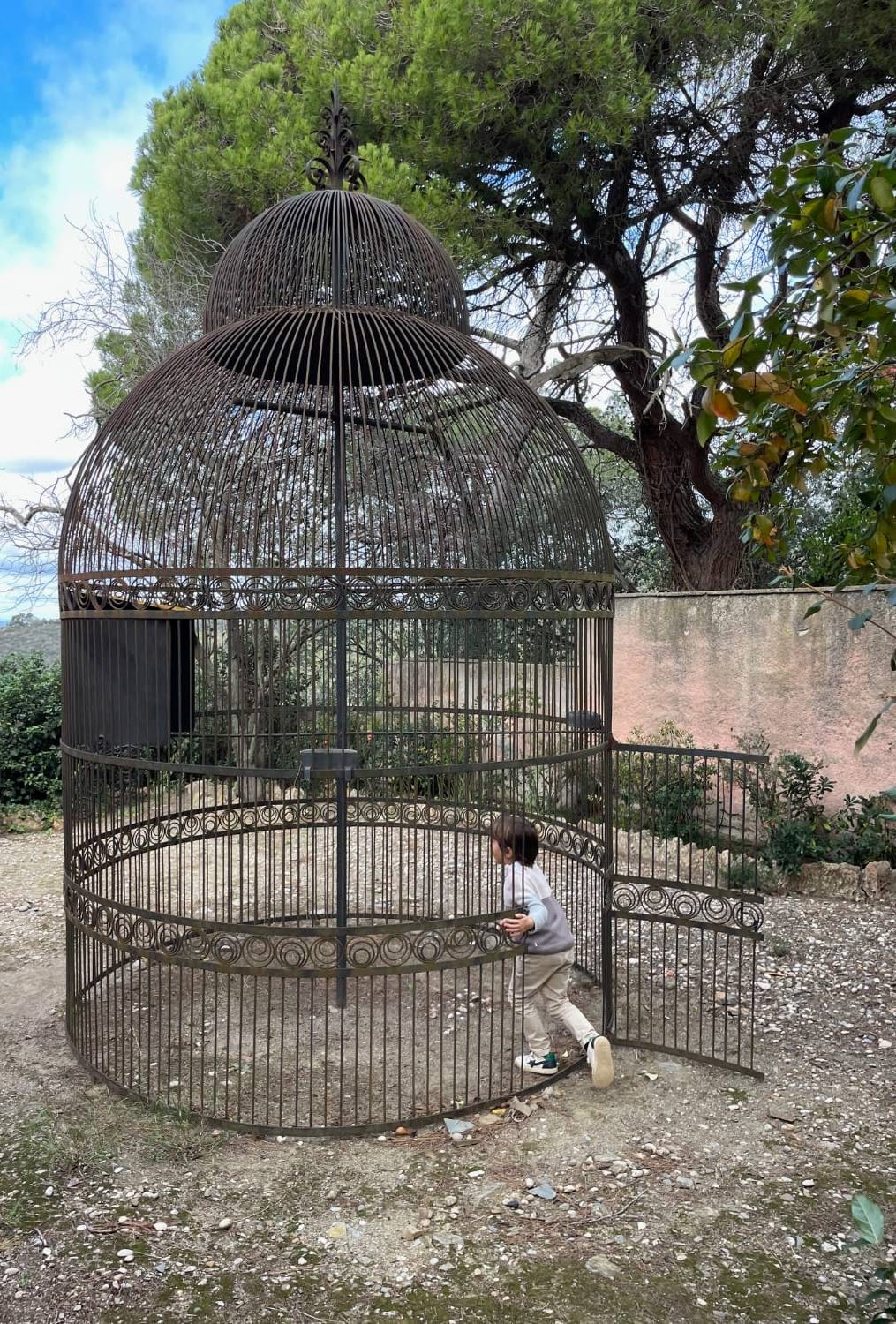
At the house they set up a little zoo, with a ring for the horses and a birdcage. They had dogs of every size, a boa constrictor that lived in the bathroom and a toothless panther (the article says it was a leopard) that they walked on a lead, and which once climbed on top of José Mari, my father’s cousin. Olga used to go to dinner at the hotel in a silk dress, with marmosets climbing up her back. In 1969 they turned up with the leopard and the boa at the Sant Antoni blessing of the animals, at Santa Maria de Vallvidrera.
The chauffeur was called Maurice; he lived in the little house on the path above and drove a Triumph convertible. He also drove the couple’s car, a Bentley painted in gold on black with oriental motifs, which my father had seen. According to the article, Dalí, a friend of the couple and a regular at their parties, thought it was a work of art. ‘¿Quién lo debe tener? Era una pieza de coleccionismo’ (who might have it now? It was a collector’s item), my father wonders. So do I.
The pilgrim
My father says they converted and were baptised at the house, and celebrated with a big party. It was in 1965, and Woodland was baptised Francisco: by 1970 La Vanguardia was already calling him ‘don Francisco de Saint Innocent’. The statue shows him dressed as a Capuchin friar, in the Franciscan habit. It was commissioned in March 1964 from Ceràmiques Bellvitge, a workshop in L’Hospitalet, on just one condition: it had to have Woodland’s face. It was put up in May 1965, with one hand pointing to the entrance to the house. They were deeply devoted to Saint Francis, the patron saint of animals, which is why lots of people think it’s him. He has lost his nose and a few fingers, but he’s still there.
Olga died in 1972, aged 78. Her memoirs, Olga, were published by Woodland in 1974, and they’re the source of much of what we know about her.
The house today
After the Marquis and Marquise, the house was bought by another family. In 2023 I got to go into the garden. The house is pink, with arched windows and a balustraded terrace that looks out over the whole range, with the Torre de Collserola peeking out behind.
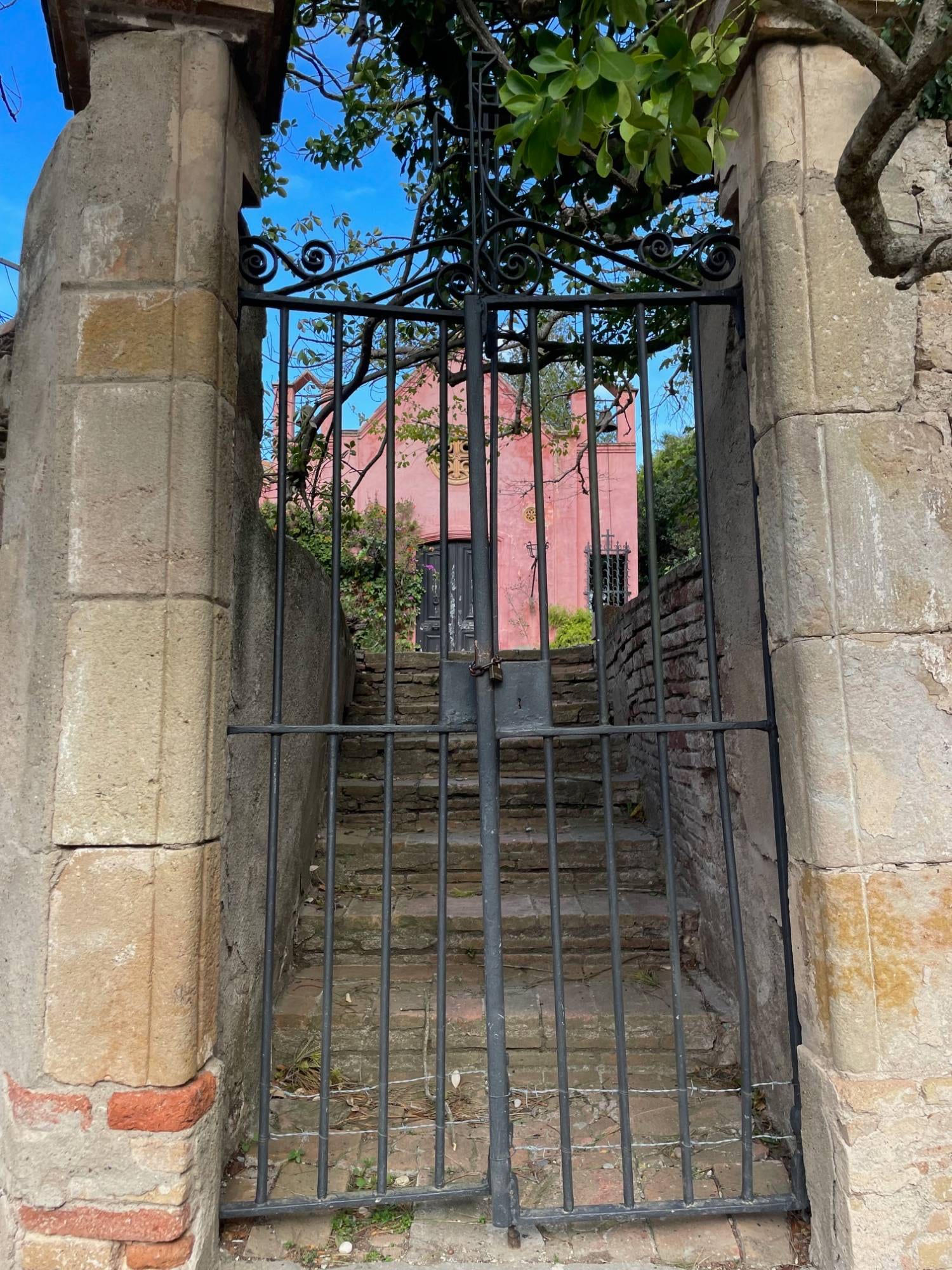
Behind a gate, a flight of stone steps leads up to the chapel, also pink. It was built by the owner of the masia in 1766 and, according to Eugeni Casanovas, who has written the history of Vallvidrera, it’s the only consecrated chapel among the masias in the area.
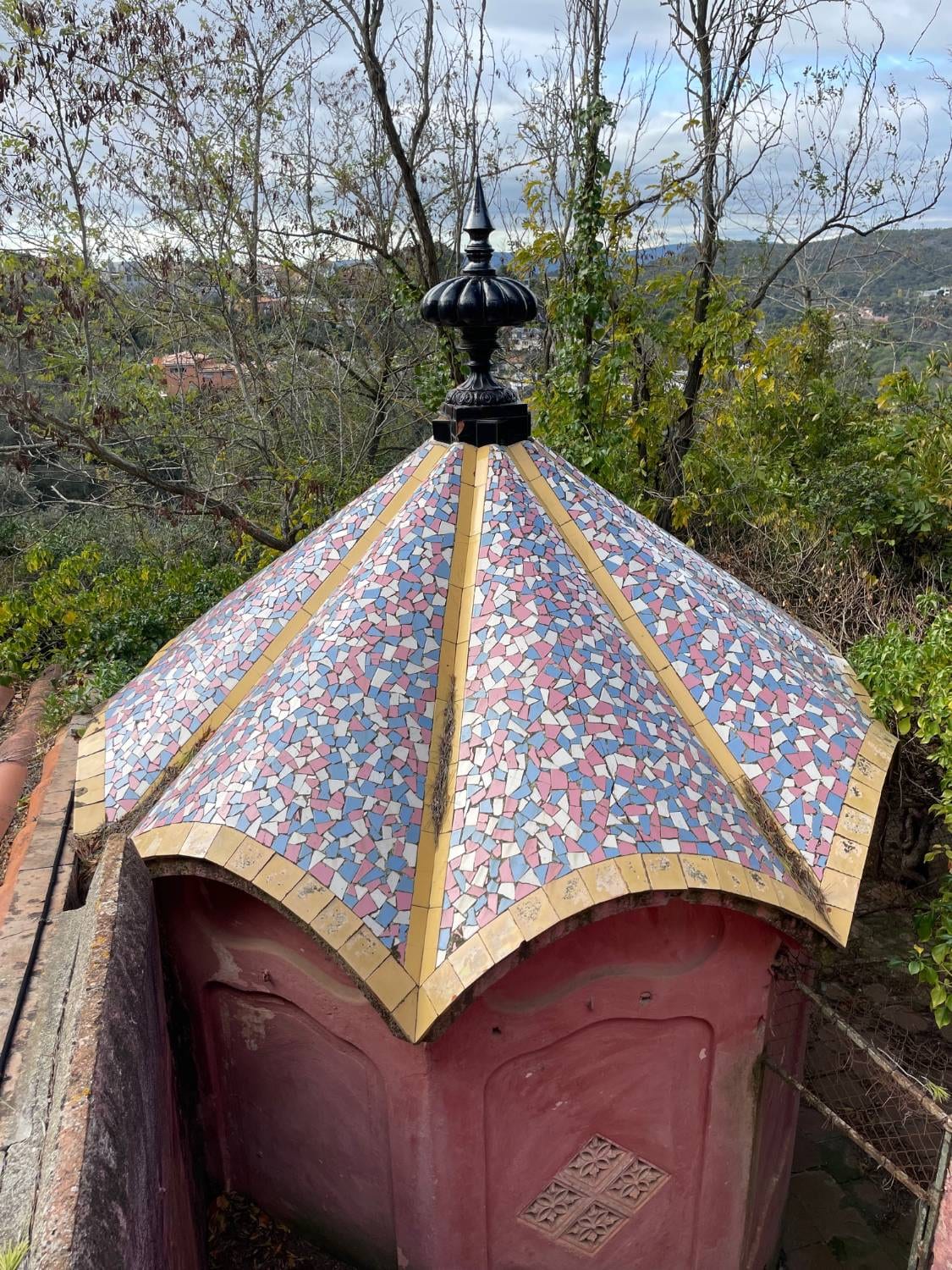
Among the trees there’s a pavilion with a trencadís roof (broken-tile mosaic) in pink, blue and white, looking out towards Collserola.
There’s also an iron cage so big that my children could walk into it standing up.
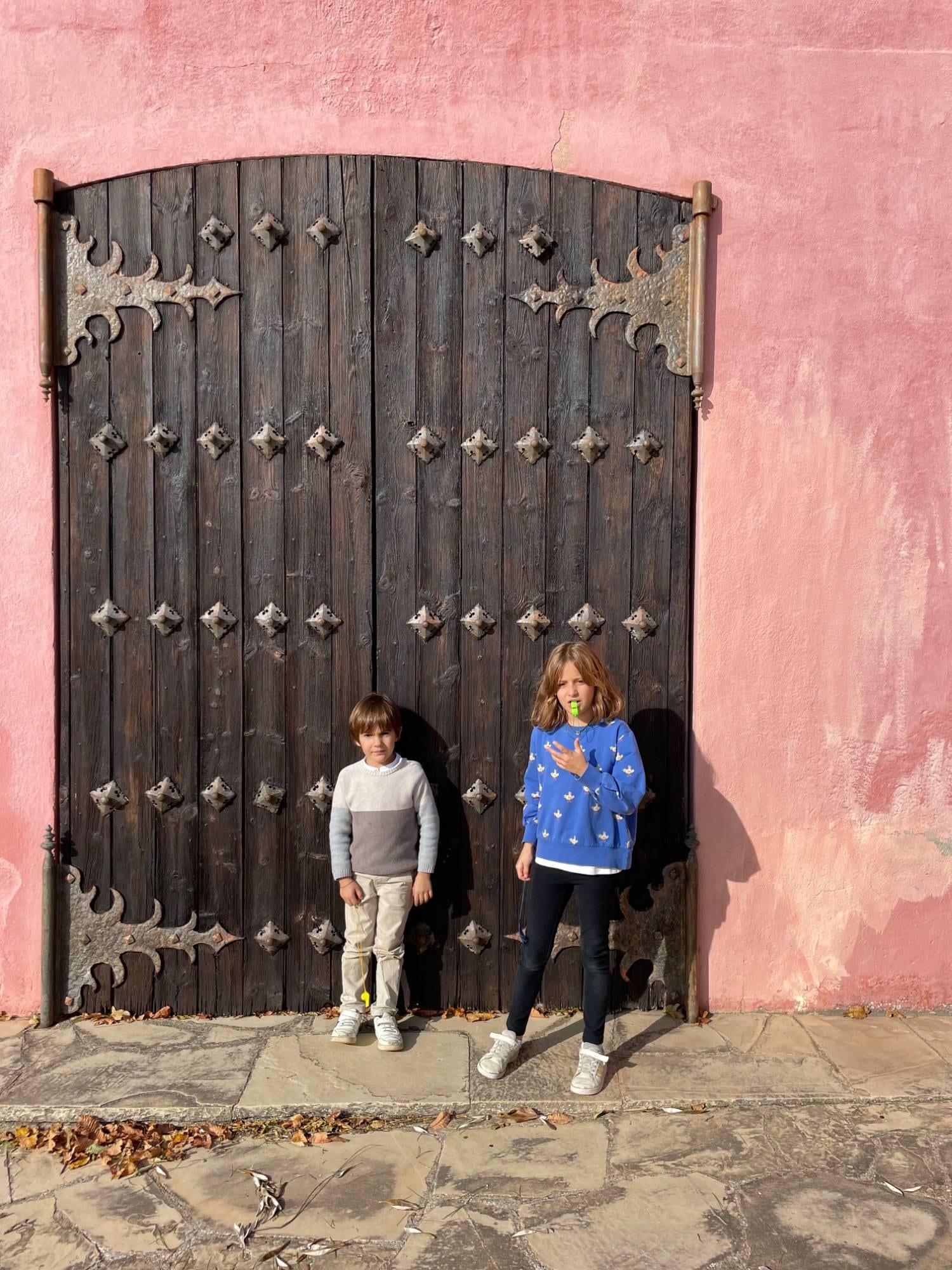
And set in a pink wall, an enormous wooden door, studded with nails and hung on wrought-iron hinges.
Where: Camí de la Font de la Budellera, Vallvidrera. The house is private; the pilgrim is on the path.
Getting there: Vallvidrera funicular, then on foot from the square (the route is in my post on the Font de la Budellera)
Further reading: ‘Els marquesos de Saint-Innocent a la Budellera’, by Xavier Gonzàlez Sanz, in La Vall de Vidre, and the entry for El Pelegrí in Barcelona City Council’s public art catalogue, and Betevé’s report Va passar aquí: el mas de la Budellera
View on Google Maps