The Tramvia Blau: 125 years climbing up to Tibidabo
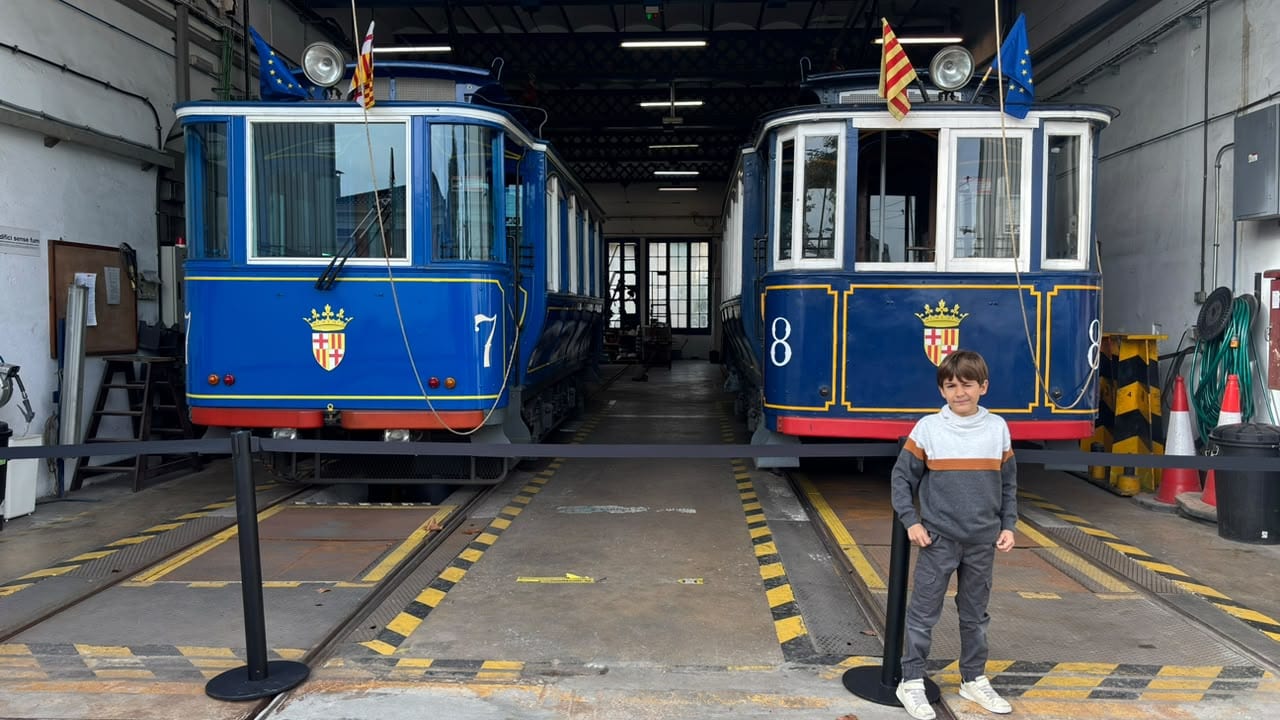
The Tramvia Blau (the Blue Tram) has turned 125, and it marked the occasion standing still. The blue tram that used to climb Avinguda del Tibidabo has been out of service since 2018, and we only get to see it when it’s brought out for a special occasion, like the open days at its depot this weekend.
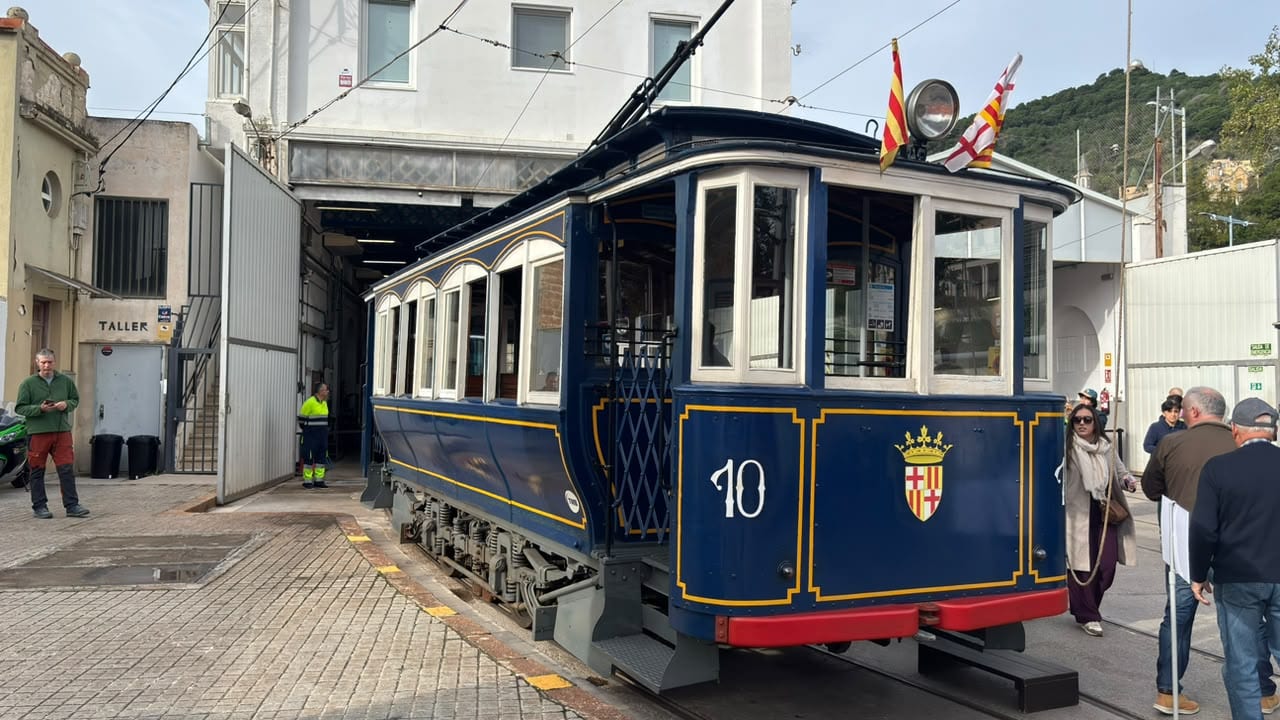
It opened on 29 October 1901, the same day as the Tibidabo funicular and amusement park. It was all part of the development of the mountain driven by Doctor Andreu, the man behind the cough pastilles, and the tram was the piece that linked the city with the lower station of the funicular. That’s why it was built to tackle the steep slopes of the avenue.
In the days of horse-drawn carriages
You have to picture Barcelona back then: horse-drawn carriages in the streets and trams pulled by horses or mules. The city’s first tram, from 1872, ran from the Drassanes to Gràcia with four horses. The first electric tram didn’t arrive until 1899, so the Tramvia Blau was one of the first to run on electricity. TMB still keeps one of those horse-drawn trams in its vehicle collection, along with the Tramvia Blau and the jardinera.
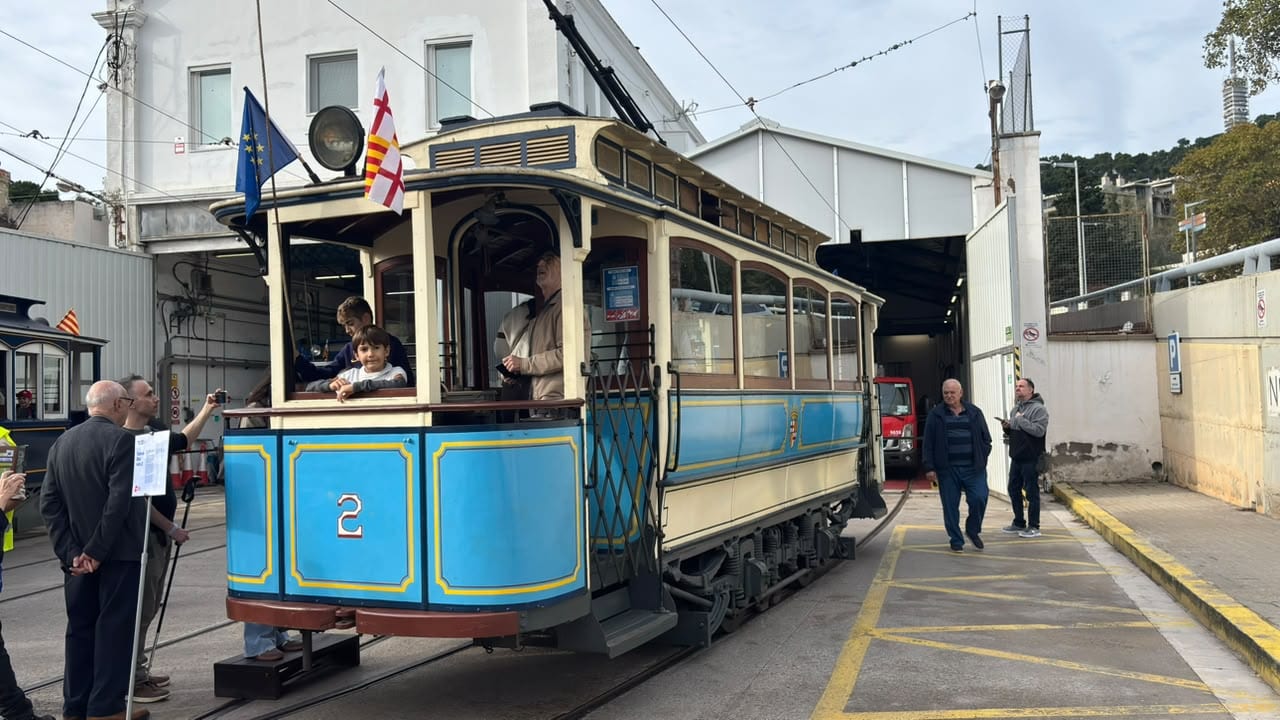
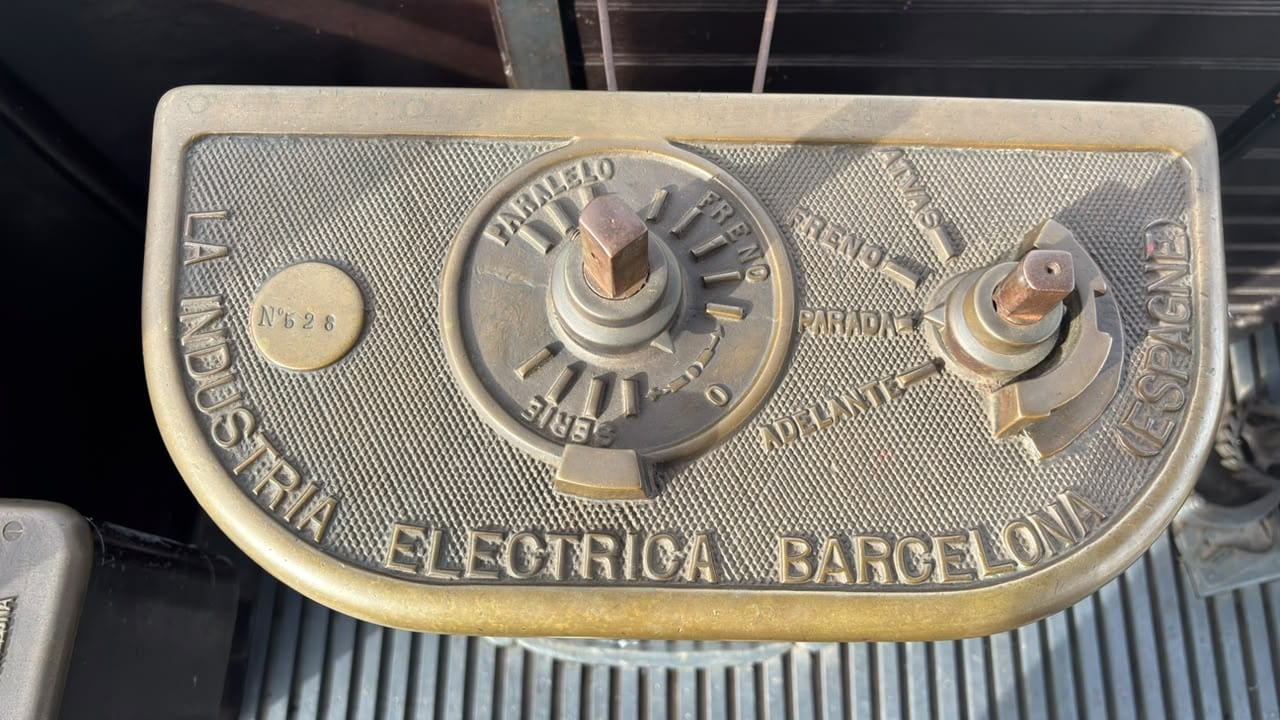
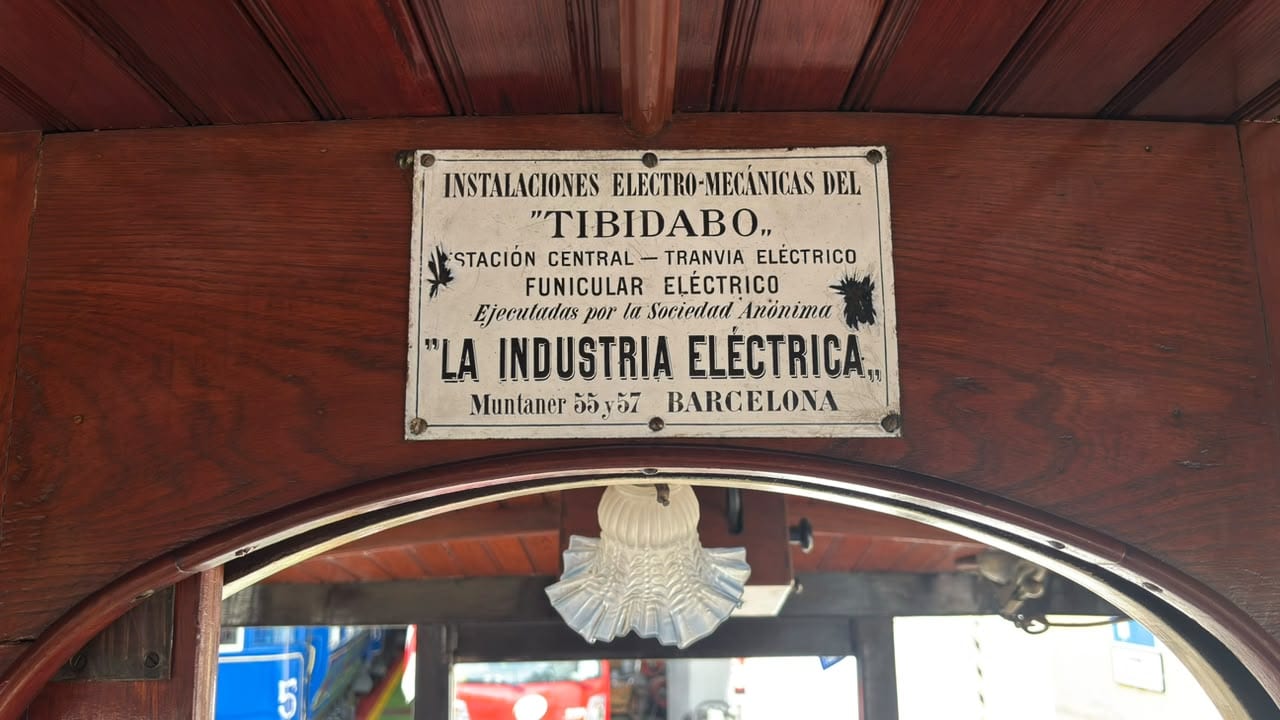
Number 2 is the only one left of the four trams that opened the line: a wooden body on a chassis made by Brill, of Philadelphia, and electrical equipment from La Industria Eléctrica, a Barcelona company. You can still see its name in bronze on the driver’s controller. It was withdrawn in 1950, spent decades in the depot and went back into service in 1983. Number 10 dates from 1905, from the series ordered to extend the line to Vallvidrera; that stretch stopped running during the Civil War and its trams ended up on the Tibidabo line.
A curiosity: it wasn’t always blue. It only took on that colour for all its trams from the 1940s.
On and off with Alex
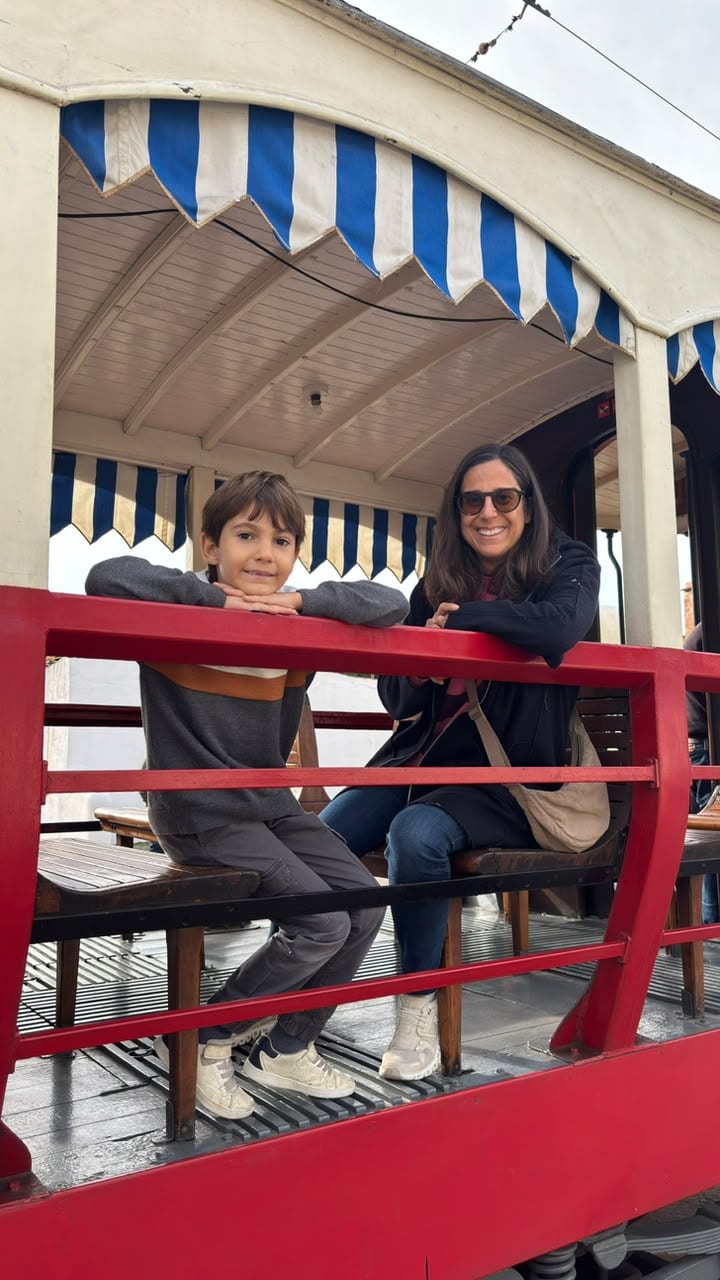
Honestly, getting on these trams takes you back to another time. My son Alex and I got on and off several times, trying out the ones they’d put on show. We really liked the open-sided jardinera one, and we were surprised by number 2, which had flower-shaped glass lamps.
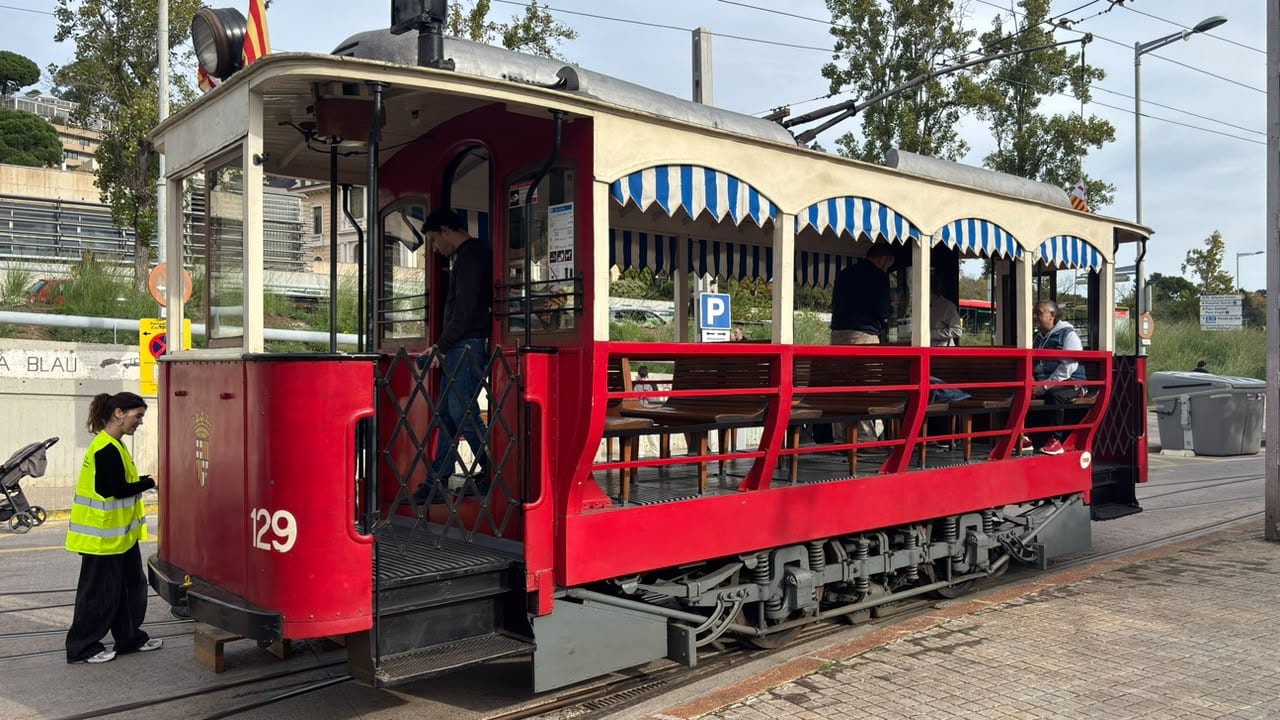
The jardineras were open trams, with a roof but no sides, that ran in Barcelona between 1873 and 1966. They were hugely popular in summer because you travelled in the open air, and they were the tram you took to the beach. The first ones were horse-drawn, and when electric trams arrived they were reused as trailers. Number 129 dates from 1906, from a series ordered from Can Girona, in Poblenou, for the summer service along the seafront. It’s the only jardinera left from the whole Barcelona network. It was restored in 1986 on the chassis of Tramvia Blau number 9, which had been withdrawn, and that’s why one of the Tramvia Blau trams is red.
So when is it coming back?
TMB, Barcelona’s public transport operator, stopped it on 1 February 2018 to renew the whole infrastructure along with Avinguda del Tibidabo. In November 2025 the City Council announced the project (a sewer collector under the avenue, the redevelopment of the street and new tracks), but work won’t start before the end of 2027 and will take between four and six years. Four of the seven surviving trams will run again. It’s a shame to have lost this little emblem of the city for so long. In the meantime, you can go up the avenue on the 196 bus, and from there carry on by funicular to the Sacred Heart on Tibidabo or go for a walk in Collserola.
It took less than thirty years to go from horses to electricity, and now Barcelona has electric buses and metro lines, like the L9 and L10, that already run without a driver. The Tramvia Blau of the future will probably be very different from the 1901 one, but I hope it keeps its wood, its benches and its lamps.
Exhibition: “Tramvia Blau. 125 anys de patrimoni i ciutat”, at the Espai Mercè Sala in Diagonal metro station (L3, L5)
Opening hours: Monday to Friday, 10:00–14:00 and 15:00–20:00 (16 to 23 November, 10:00–14:00 only)
Price: free
Website: TMB
View on Google Maps