The Font de la Budellera in Collserola
The Font de la Budellera, in Collserola park, was in its heyday an almost ‘miraculous’ source of water. Lots of people used to go and fill their water jugs there, believing (and perhaps it was true) that the water, coming from the forest, was much purer. Until, one day, a little sign went up saying something like ‘No se asegura la potabilidad del agua’ (the water is not guaranteed to be drinkable), right after the works on the communications tower, and that was the end of the legend.
The origin of the name isn’t clear… it may come from ‘budells’ (Catalan for intestines), and there are several possible reasons:
- Because it was said to be good for the intestines, miraculous, as I said.
- Because the entrails of dead animals used to be thrown away around there. (I don’t find this origin very appealing…)
- Because there was a workshop nearby that made strings for instruments out of animal intestines.
This fountain, the work of the French landscape architect Jean-Claude Nicolas Forestier, is getting on a bit (1918), as you can see from the wear on its face.
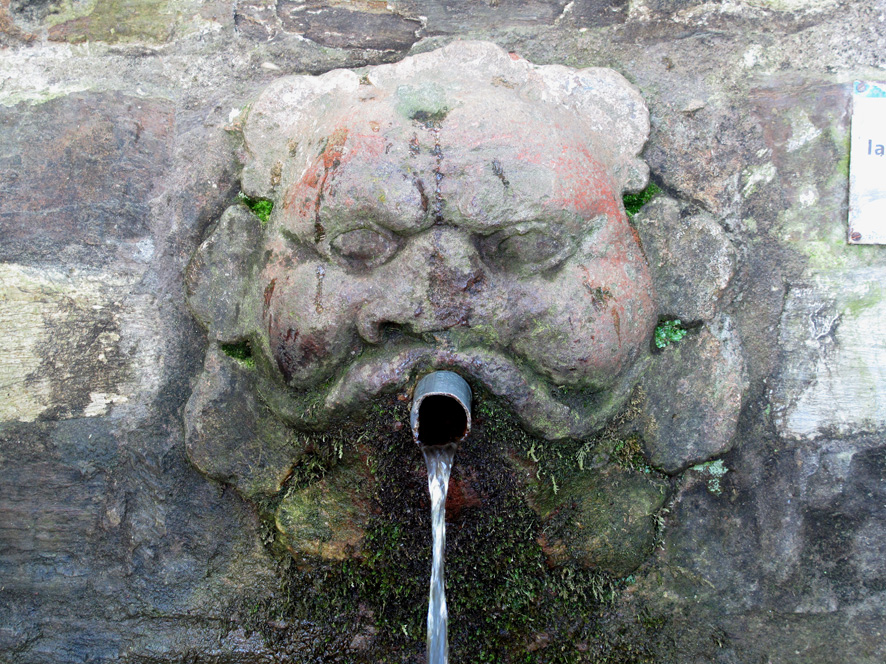
The fountain was restored in 1988 and stands in an area where you can stop for an afternoon snack, with a small porch, stone tables and several flights of steps that will keep the little ones busy.
To get there from Barcelona, take the Catalan railways (FGC) towards Terrassa or Sabadell and get off at ‘Peu del Funicular’. From there, take the funicular (opened in 1906, although it has been completely refurbished and there’s not a trace left of its old ‘look’) and get off at the last stop, Vallvidrera.
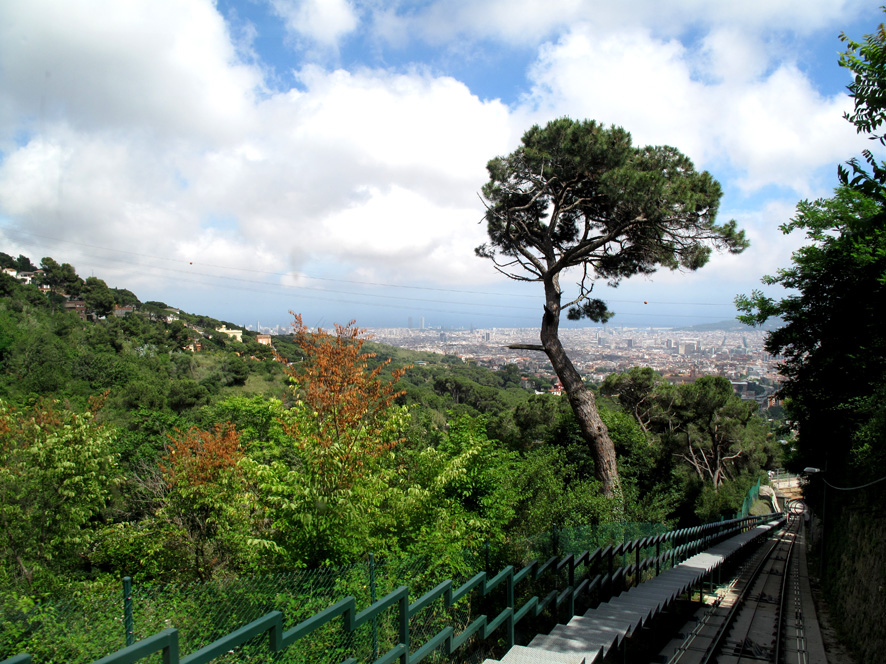
We come out into a square; from there we go up the steps on the right and carry straight on along ‘Camí dels Algarves’ until we reach ‘Carrer de les Alberes’, where we turn left. Then we take the second street on the left (not the first), ‘Carrer de Can Basseda’, and carry straight on along this road until we reach a junction, where we continue along ‘Carrer de Gabriel Ferrater’ until we get to ‘Carrer de la Budellera’.
As you enter the Budellera park (part of the Collserola range), you’re greeted by a pilgrim, and the curious thing is that the statue welcoming you with its right hand has the face of the former owner of the house (the Marquis of Saint-Innocent). Popularly, though, it was said to be Saint Francis of Assisi, founder of the Franciscan Order and protector of animals. Whoever he may be, in his younger days he still had the hand that’s now missing, and in it he held a staff.
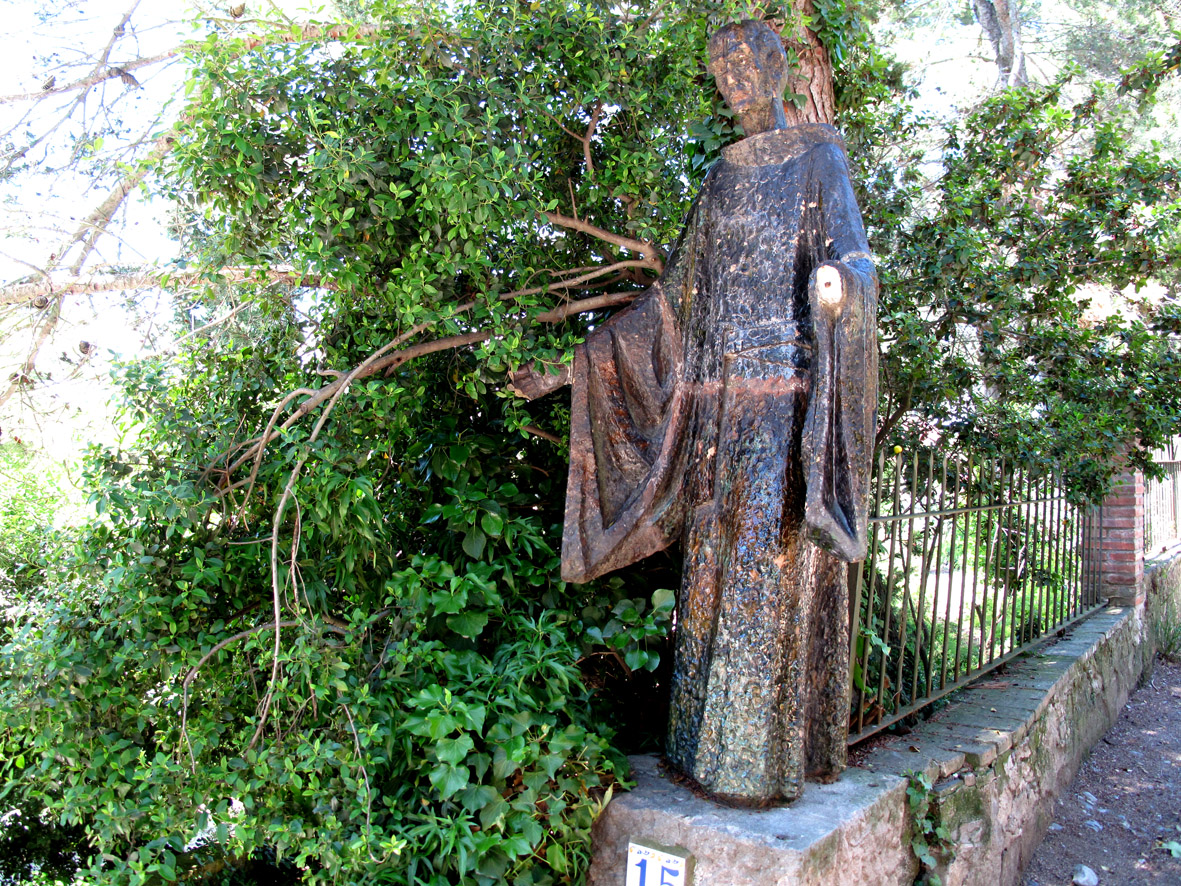
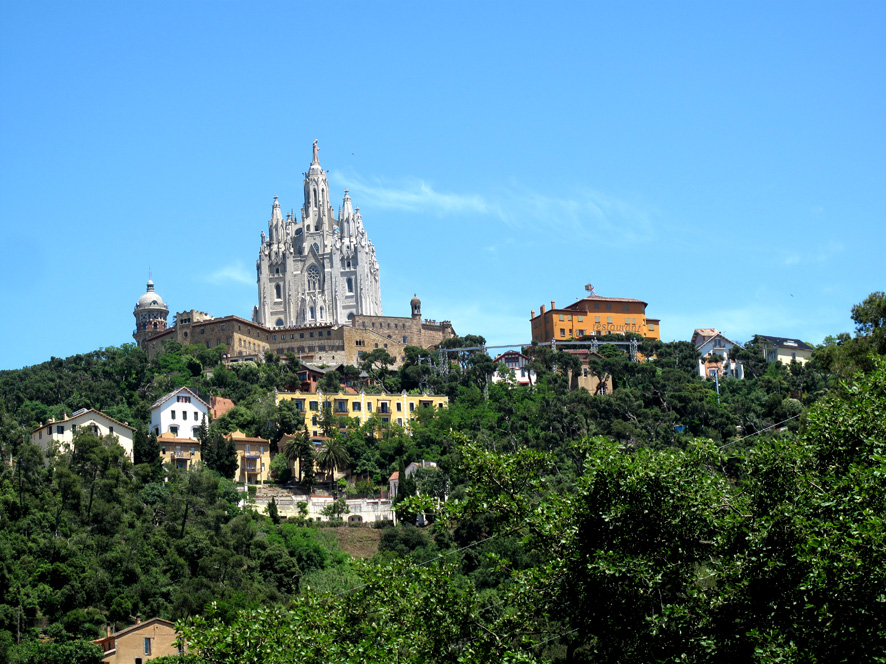
Once inside, there are three paths to choose from, and the one on the left is the one that takes us to the Font de la Budellera. It goes downhill and it’s a short, pleasant walk in the shade, among pines and holm oaks. You reach the fountain down some stone steps, and along certain stretches you can enjoy views of Collserola park with Tibidabo in the background.
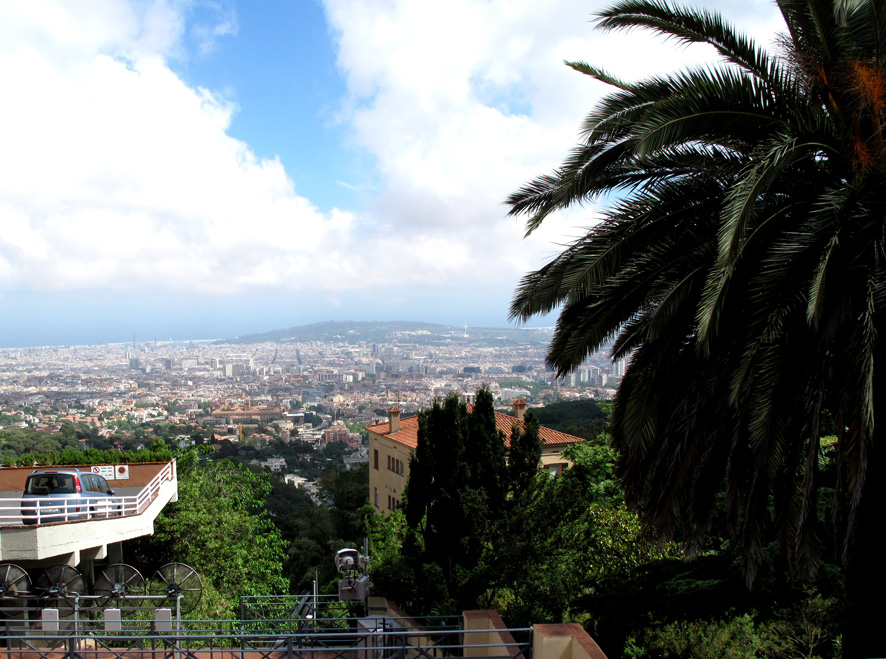
 On the way back we retrace our steps, and once at the funicular station, before heading back to the city, you can go up to the roof terrace and see Barcelona from another angle.
 And if you fancy it, before heading back to the city you can stop at Casa Trampa for a tapa of Jabugo ham or some meatballs and a glass of wine. It’s an iconic Catalan restaurant on the square in Vallvidrera.
More photos of Barcelona on Instagram: @anotherbcn