The Somorrostro neighbourhood, Barcelona
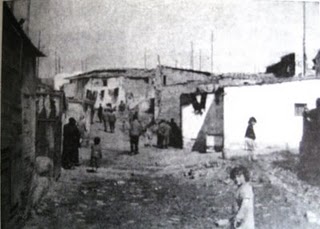 The Somorrostro was a Barcelona neighbourhood in what would now be partly Poblenou and partly Barceloneta, all along the seashore.
It stretched from the Hospital del Mar (the infectious diseases hospital) to the Bogatell sewers.
They say its name might come from ‘asomar el rostro’ (to show one’s face), because it was from the water’s edge that you could see the fishermen’s faces appear, but I doubt that’s where it comes from.
The Somorrostro was a marginalised neighbourhood on record since 1882, the date of the oldest known reference to it, in the Diari de Barcelona. It kept growing, above all during the 1929 Universal Exhibition, when labour was needed for the building work. It lasted until 1966, when it was demolished to make way for what is now the seafront (the Mapfre towers, Bogatell beach, all the way to the Fòrum, etc.).
It was known for its extreme poverty and was mainly home to Gitanos (Spanish Roma), fishermen and immigrants, who lived in shacks thrown together any old how. Whenever an easterly storm blew in, many of these shacks disappeared.
Everyone else in Barcelona remembers it because they’d heard about it, not because they’d been there or even gone near it: they didn’t dare set foot in an area that unnerved and frightened them, without really knowing why.
Carmen Amaya and the Somorrostro
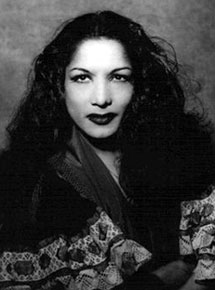 This is the neighbourhood where Carmen Amaya was born, one of the finest flamenco dancers and singers, who defined an era and a style of dance. Dolores Giménez, president and founder of the Asociación Cultural Flamenca Carmen Amaya, remembers Carmen like this: ‘My eldest sister tells me she performed at a theatre in Barcelona and it sold out, and lots of Gitanos from the Somorrostro couldn’t go and see her, some because they had no money, others because there were no seats left. So when she found out, she went to her neighbourhood and danced for her own dear Gitanos.’
While searching I came across some accounts of Carmen Amaya’s life in the Somorrostro. Here’s an extract from her testimony:
‘There’s an alleyway into the Somorrostro, next to the infectious diseases hospital. It’s an alleyway so you don’t have to go the long way round, along the beach or past the gasworks boilers. At the entrance there’s a little stone bench. I was amazed to see the water had come up that far. It was about half past two. Dad was frightened to death. Let’s see what’s happened at our shack, with your mother and the children. But by some miracle the water had gone past the gate of the hut without getting inside. As we were used to these things by then, we went to sleep. Then, a while later – oh my goodness! – a wave came right inside: the beds, the clothes, everything floating. We grabbed the children as best we could and ran back to the alleyway. Hundreds of people crammed into the alleyway. At about nine or ten in the morning we went back to the shacks. The shacks, there wasn’t a single one left, all buried in sand. You could tell where your shack had been by a little tip of something sticking up, like that.’
More links about the Somorrostro
If you’d like to get an idea of what this neighbourhood was like, a good many of the scenes in the film Los Tarantos were shot in the Somorrostro and can be considered documentary footage.
Carmen Amaya also appears in this film, among other well-known Gitanos of the time.
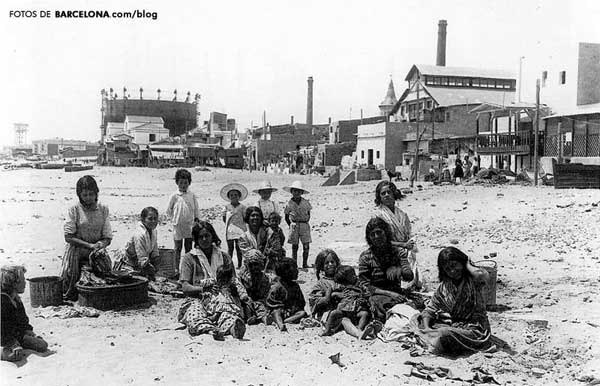
Searching online, I also found that in 2008 the Museu d’Història de Barcelona held an exhibition called Barraquismo: ciudad informal (Shanty Towns: The Informal City). On this website you can see some family photographs, a map of where these shanty areas were, a video of first-hand accounts and a short summary of their history. Here’s a little excerpt to whet your appetite:
‘Barcelona’s shanty towns, an urban phenomenon that ran right through the 20th century, created an informal city alongside the planned city of the old town centres, the Eixample, the housing estates and other forms of peripheral growth. This informal city spread across Montjuïc and the seafront, and took over both the hills and some of the in-between spaces on the edges of the Eixample.
Their complete eradication in the years before Olympic Barcelona has left no trace of them on the ground, but their history, which lives on in the memories of many former shanty dwellers, is still full of light and shade.’
This article goes further into the theories about where the name Somorrostro comes from.
I’m also including a video about shanty towns in Barcelona.
The truth is that it’s hard to find information about this neighbourhood; it seems to be a forgotten part of the city. That’s why, with this post, I’d like to encourage anyone who still remembers the place to share their experiences and memories in the comments.
More than a month after this post was published, La Vanguardia ran a story (9 November 2010) announcing that Barcelona would probably give the name Somorrostro to a stretch of its beach. I’m delighted for everyone who has fought to keep the memory of this neighbourhood alive, marginal as it was.
More photos of Barcelona on Instagram: @anotherbcn