The Sagrada Família and its consecration
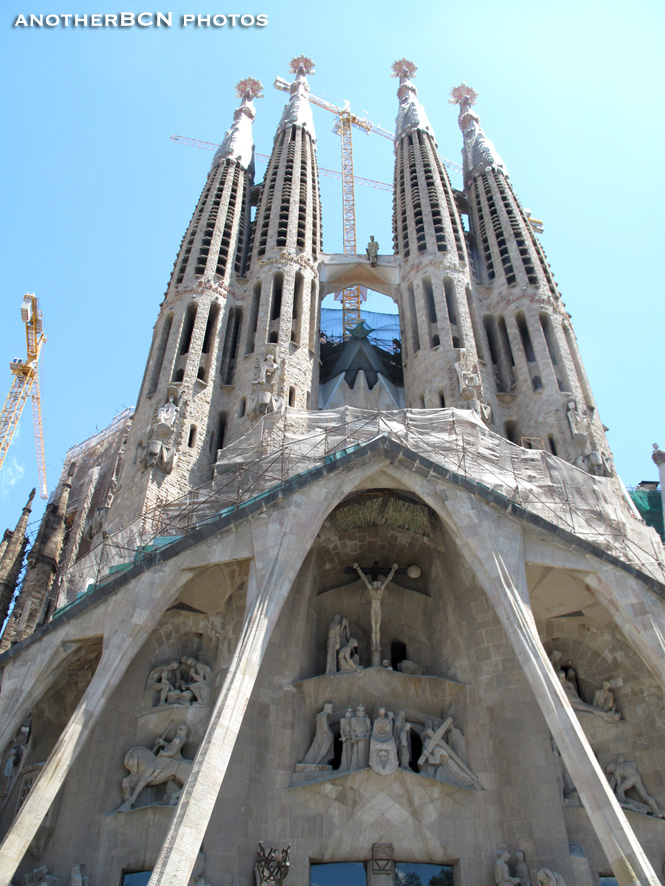 Tomorrow is the consecration of the Expiatory Temple of the Sagrada Família, and whether we’re religious or not, it’s a big day for Catholics all over the world, and for every admirer of Gaudí too. The papal visit has given the building work a real push, which is just what this expiatory temple needed, as it’s been under construction since 1882. Although some elements are still unfinished, the interior only needs its final touches. Now, for the first time, you’ll be able to appreciate its grandeur from the inside.
Turning briefly to its history, the Expiatory Temple of the Sagrada Família was the initiative of Josep Maria Bocabella, a bookseller and philanthropist who, after a visit to Rome, developed a deep devotion to Saint Joseph and decided to promote the values of the Christian family. Hence the temple’s name, Sagrada Família (Holy Family), and the laying of the first stone on 19 March 1882, Saint Joseph’s Day. Incidentally, tomorrow’s consecration will be performed by Pope Benedict XVI, whose given name, as it happens, is Joseph. What a fortunate coincidence!
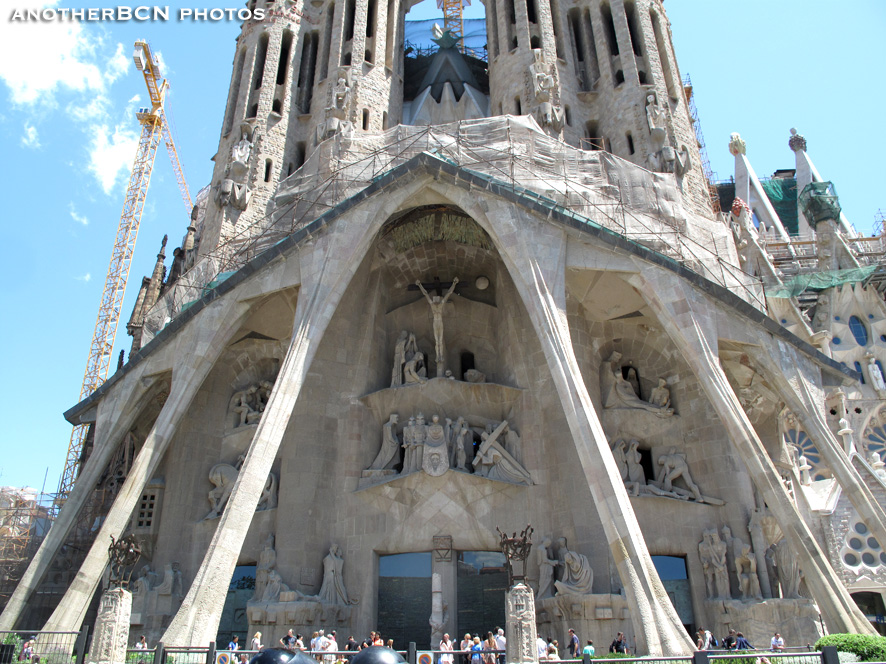
As I was saying, the project was first entrusted to Francisco de Paula del Villar y Lozano, but he left it after disagreements with Bocabella’s advisory architect (Joan Martorell). It was finally offered to Antoni Gaudí, who would make the Sagrada Família his life’s work and, ultimately, the emblem of Barcelona. Work under Gaudí began in 1883, and he devoted himself to the temple until the year of his death, 1926. Early in the commission, on receiving a large donation, he decided to change the neo-Gothic approach and innovated in every sense. The Gaudí project consists of a great church laden with symbolism, intended as an explanation of the teachings of the Gospels and the Church. When Gaudí died, what was left of the project were plans and a plaster model that was badly damaged during the Spanish Civil War. The architects Francesc Quintana, Isidre Puig i Boada and Lluís Bonet i Garí were left in charge of the project, while the sculpture on the Passion façade was entrusted to Josep Maria Subirachs. His sculptures caused controversy because they broke with Gaudí’s style.
The temple has always been expiatory; in other words, from the very beginning it has been built with donations. Gaudí himself said: ‘El Temple Expiatori de la Sagrada Família el fa el poble i s’hi emmiralla. És una obra que està a les mans de Déu i en la voluntat del poble’ (‘The Expiatory Temple of the Sagrada Família is made by the people and is mirrored in them. It is a work that is in the hands of God and in the will of the people.’) In any case, many churches in Barcelona were built through the will and effort of the people, such as Santa Maria del Mar.
Once finished, the Sagrada Família will stand out for its 18 conical, circular towers: four at each of the three entrances, making 12 dedicated to the apostles; acting as domes, there will be a system of six towers, with a central 170m tower dedicated to Jesus, four more around it dedicated to the Evangelists, and a second dome dedicated to the Virgin Mary. Inside, there will be tree-like, leaning columns and vaults based on hyperboloids and paraboloids, in search of the optimal catenary shape.
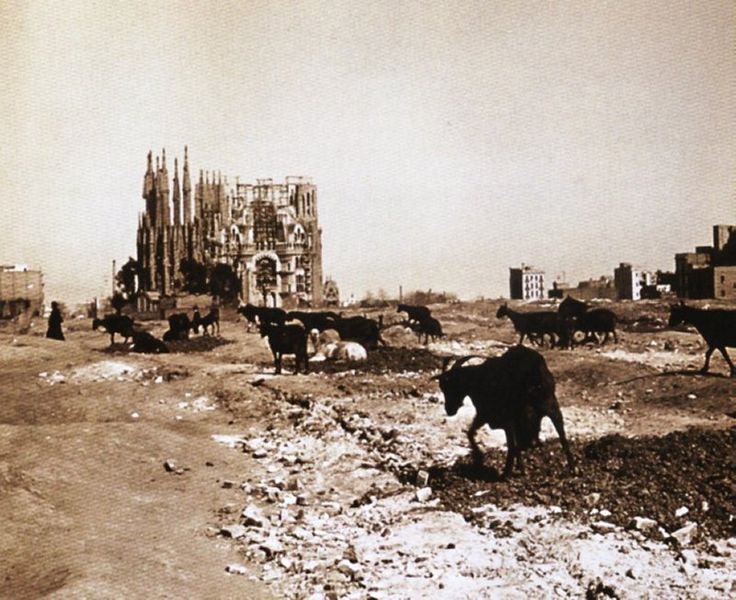
Although the original urban plan was more ambitious, with gardens in the shape of an eight-pointed star around the Sagrada Família so it could be seen from all sides, the city’s rapid growth in the early 20th century and rising land prices meant that the large garden was reduced to what it is today: two squares, one in front of each main façade.
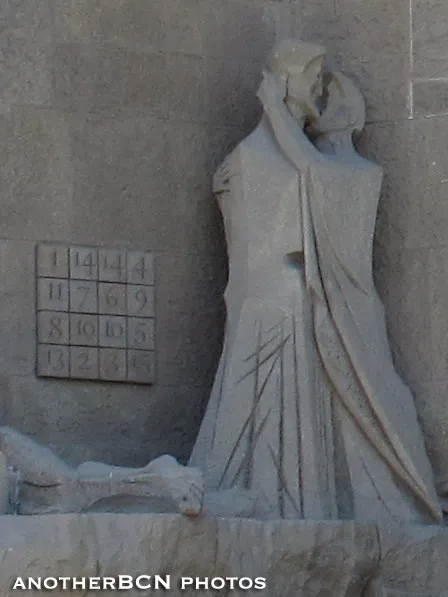
Of all the symbolism on the Sagrada Família, there’s one curiosity I’d like to mention: a magic square on the Passion façade, next to the sculpture of ‘the Kiss of Judas’. It’s a 4×4 grid of numbers in which every row, every column and both main diagonals add up to 33. Gaudí, as well as being a great architect, was very devout, and it’s said he may have been a Freemason, although there’s no documentation to back this up; either way, I don’t doubt they invited him to join. So 33 may refer to the age at which Christ died or else to the highest degree of Freemasonry (and the second may well come from the first, I don’t know). In any case, I’ll set you a challenge: find the other 2 magic squares in the Sagrada Família, as there are 3 in total in the whole temple. 😉 Honestly, I don’t know for sure, but that’s what I’ve been told; I’ll be looking for them too.
Finally, here’s a link in case you’d like much more detailed information on the Sagrada Família.
View Temple of the Sagrada Família in a larger map
More photos of Barcelona on Instagram: @anotherbcn