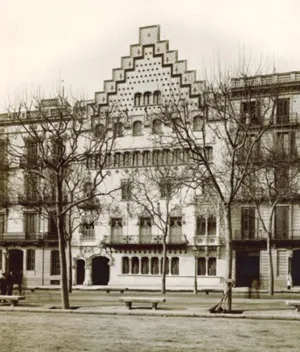
The Eixample sewers
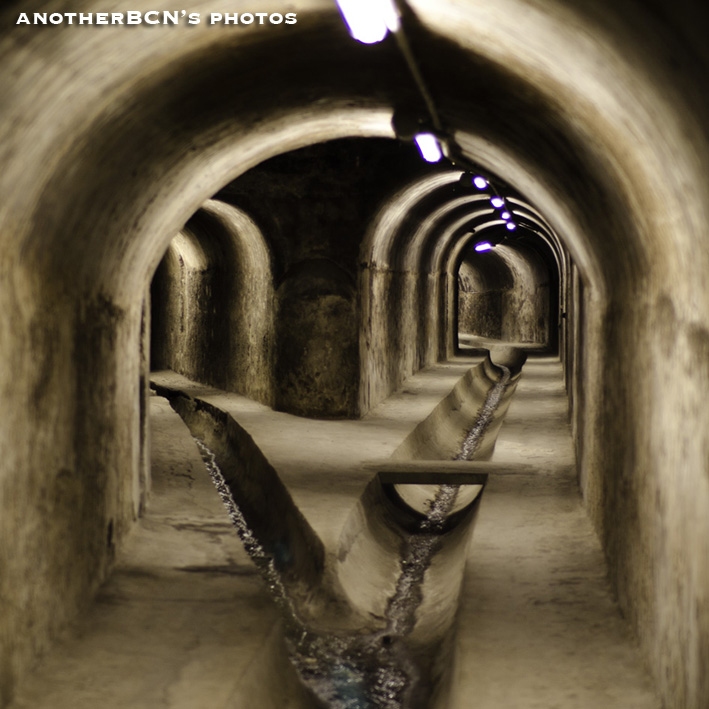 Every day we shower, go to the loo, put on a wash or run the dishwasher, wash our hands, and so on. The city also needs to water its parks and clean its streets… The number of daily tasks that involve using water is huge, producing somewhere between 5,000 and 7,000 litres of waste water every second of the day. Without getting into sustainability, all this means a parallel underground world of 1,693 km of rivers and tributaries that carry the water to the treatment plants.
The oldest sewers found in Barcelona date from Roman times: the Romans were already aware that waste water had to be carried away, above all for reasons of hygiene and public health. The system has been improved over time ever since. The Eixample sewer network, which you can visit along the stretch of Passeig de Sant Joan between Diagonal and Aragó, dates from 1891.
Yesterday I went on this tour, which is organised by La Fàbrica del Sol, and it’s really interesting. The meeting point, after booking by phone or email, is Passeig de Sant Joan 91. They kit you out with a helmet and gloves, and you go down some steps into the most presentable part of Barcelona’s entire sewer system (the most presentable because this stretch has been fitted out for visits). It smells bad and the odd rat pokes its head out along the way, but I’d thoroughly recommend the visit.
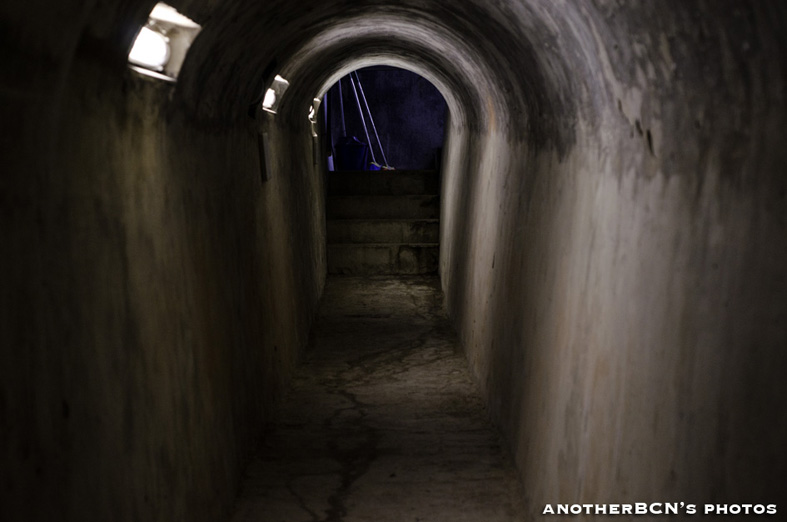
Every street in the city has a tunnel, bigger or smaller, carrying the waste water from each of the buildings, which arrives through a small opening in the channel. There are some larger openings at the sides, which is where water from the streets comes in when it rains. When you reach Aragó there’s a small waterfall that diverts the water away from the metro line, and once you’re past Carrer d’Aragó some pumps lift the water back up to its normal level. On the Diagonal side, right under Plaça de Mossèn Jacint Verdaguer, a fairly sizeable river carries the waste from the part of Barcelona that lies above the Diagonal.
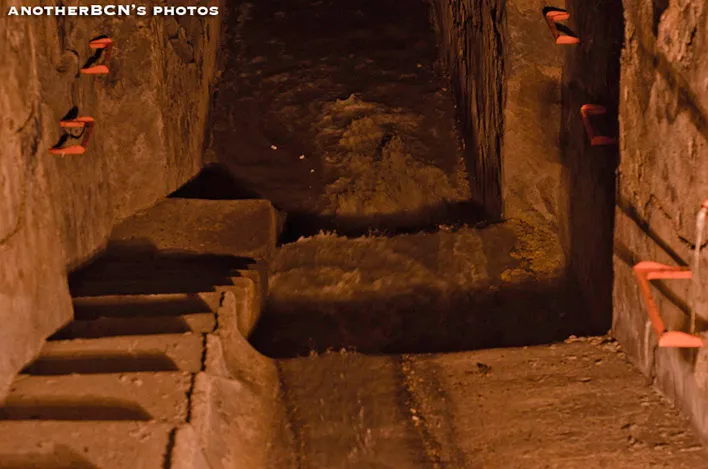
As you can see in this photo, and in others if you go to anotherBCN’s Facebook page, the water contains very little solid waste. Both toilet paper and our own waste, to put it delicately, break down almost completely (it also depends on how high up your flat is). Anything else doesn’t break down, which is why we should limit and keep an eye on what we flush down the loo.
All this water is taken to the treatment plant, where it is first filtered through grilles and then bacteria finish off any solid matter that may be left. Once the whole treatment process is over, the water ends up in the sea.
When there’s heavy rain, a number of stormwater tanks come into use (the one under Parc de Joan Miró can be visited), taking the pressure off this underground structure and, in many cases, stopping the manhole covers from lifting. All this stored water is used to water parks and decorative fountains.
Curiously, there’s cabling inside the tunnels: fibre optic. It’s the only kind of cable that can make use of these tunnels, as neither water nor damp interferes with the signal.
Photos of the visit to the sewers.
More information about the sewers.
View Sewer visit, Passeig de Sant Joan in a larger map
More photos of Barcelona on Instagram: @anotherbcn