Air-raid shelter 307, Barcelona
Beneath the streets of Barcelona, 1,384 air-raid shelters were built during the Civil War.
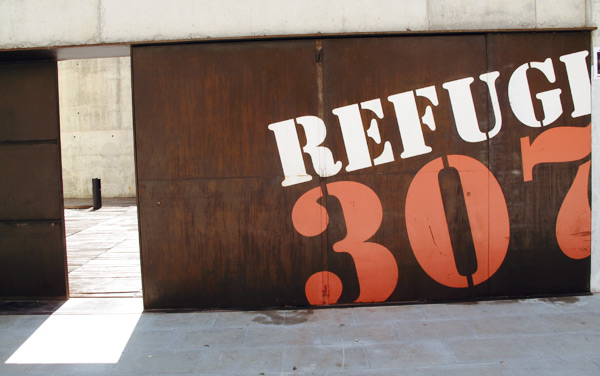
Today we’ll focus on shelter 307, in Poble Sec, an area close to the port and therefore one of the bombing targets.
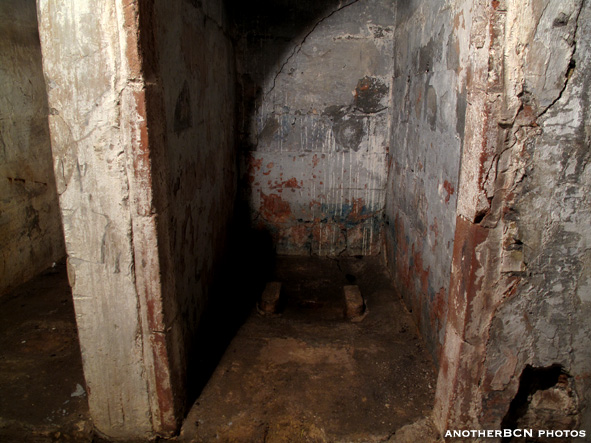
While most shelters were made by digging downwards, to depths that could reach 25 metres, in this case the hillside was used to make the work easier, and the tunnels were dug straight in horizontally. This air-raid shelter could hold up to 2,000 people. The walls were reinforced with brick and the ceiling was a Catalan vault (volta catalana). Along the tunnels there was electricity, benches, toilets and a small infirmary in case anyone arrived injured, all of it extremely basic and in short supply.
The infirmary was a space of about 6 square metres with a few bunks for people who arrived injured. This area was insulated from the mud floor by a layer of bricks and a layer of air to keep out the damp.
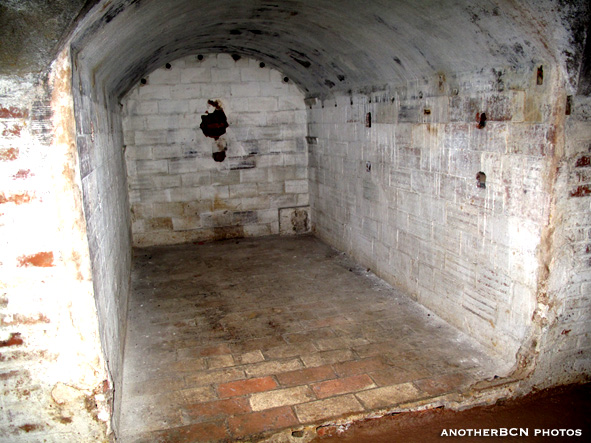
As for toilets, there were 3 for men and 3 for women, along the sides of the corridors. The men’s was a hole in the ground; the women’s, a humble porcelain toilet.
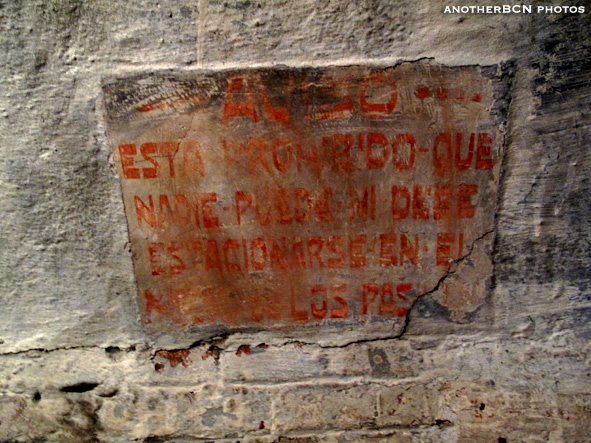
There were also a number of signs painted in red reminding people of some of the rules of the place: that talking about politics or religion was forbidden, that the elderly, women and children were to be given a seat, that the corridors mustn’t be blocked, etc. A set of instructions that made living together safer and more orderly, which was essential in such a small space.
The shelter keys were passed from person to person like a relay baton. Whoever held them was responsible for opening the shelter in the event of a bombing raid, and had to be the first to arrive to open the doors to the public.
These shelters are a reminder of one of the most tragic episodes in Barcelona’s history. A population that came under attack while behind the front line, and was therefore unprepared for war.
Once the war was over, shelter 307 was put to other uses. A glass factory used part of it as a furnace and storeroom, which is why that area was left completely blackened. It was also the era of the shanty towns, and many immigrants from outside Catalonia who came looking for work built shacks in the area. An Andalusian family looking for a home also made use of the place: they settled in another part of it and made the space their own, making it cosier with a fireplace and decorating it their way.
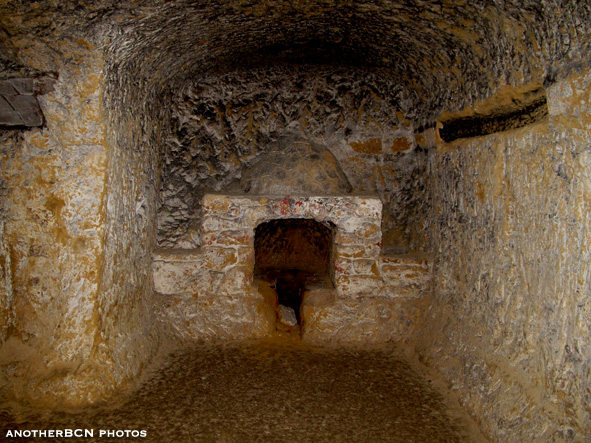
Lastly, a mushroom ‘grower’ also shared the tunnels, as it was an ideal place for them to grow: damp and dark. So for years the shelter was shared for these three purposes: factory, home and farming. In the end it was left abandoned to the mercy of time.
Another shelter that’s interesting to see, and free to visit, is the shelter in Plaça de la Revolució.
While browsing the internet, I came across a little gem of the city’s historical memory: a blog written by around twenty people, split into groups from civic centres and community centres, who take computer classes and write down their memories of days gone by.
Address: Nou de la Rambla 169, 08004 Barcelona
Getting there: Metro: Paral·lel
Visiting hours:
Monday to Saturday, pre-booked groups only.
Sundays: guided tours at 10:30, 11:30 and 12:30.
In all cases places are limited and booking is essential: 93 256 21 22 or reservesmuhba@bcn.cat (enquiries Monday to Friday, 10:00–14:00 and 16:00–19:00)
Closed on public holidays.
More photos of Barcelona on Instagram: @anotherbcn