Montjuïc Castle, Barcelona
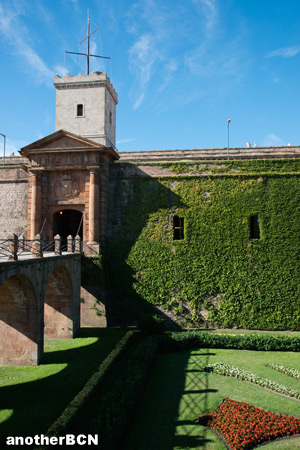 Over the centuries, Montjuïc hill has been a very interesting spot: for its easy access to water, for its natural resources, such as building stone (Roman Barcino and many of the buildings in the Eixample were built with stone from Montjuïc), and for its height, perfect for keeping an eye on the surrounding area. The Iberians had already settled here before Roman Barcino.
But to understand the castle’s origins, we’ll start in the 11th century, when there stood the castell del port (the port castle), a castle with a small watchtower (the torre del farell) that served as the residence of Ramón Berenguer II and Berenguer Ramón II.
That castle was forgotten for years, and it wasn’t until 1640 (the time of the Reapers’ War, the Guerra dels Segadors) that the people of Barcelona decided to build a military fort to defend themselves against invaders. A small fort was built to protect them from the war. Remains of this fort can still be seen in one of the castle’s exhibition rooms (room 15).
After the War of the Spanish Succession, in 1751, Cermeño (a military architect) brought the Montjuïc Castle project to life in neoclassical style. For the first time, the castle wasn’t built to defend the city: its purpose was to besiege Barcelona and put down any kind of uprising.
Once the castle became a threat, it saw several episodes of great violence against the city. For example, Espartero fired 1,012 shells at Barcelona to crush an uprising by workers who were unhappy with their conditions.
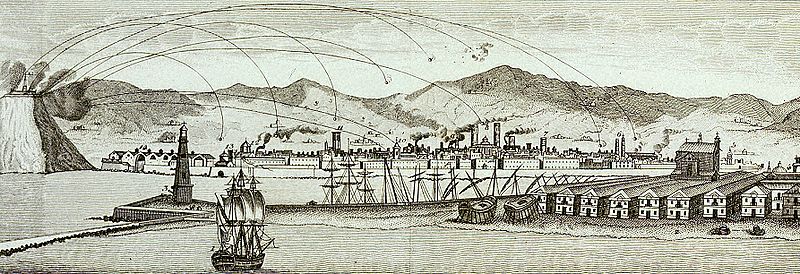
During the Civil War, in 1937, anti-aircraft batteries were installed on the hills around the city to shoot down the Italian planes that flew over Barcelona to bomb it. You can see some on Montjuïc, but there are also remains on the Turó de la Rovira (the El Carmel bunker) and in Collserola (the Sant Pere Màrtir bunker). Even so, these anti-aircraft batteries had disastrous results, because when the planes were shot down they fell onto the city along with their bombs, causing even worse damage.
To protect people from the bombing raids, 1,384 air-raid shelters were built all over Barcelona; one of the best known is air-raid shelter 307.
During the Civil War, the castle’s moats were the scene of hundreds of executions; it was in the Santa Eulalia moat, specifically, that Lluís Companys was shot by firing squad on 15 October 1940.
The tour, which I had the chance to go on, opened up areas that are normally closed to the public, such as:
-
The Santa Amalia water tank: a 1,900 m³ tank whose water is now used to irrigate Montjuïc hill. It was designed by Cermeño in 1751. In the access area you can still see the marks of what were once the army workers’ quarters.
-
The dungeons, where hundreds of people were held prisoner, among them the libertarian educator Francesc Ferrer i Guàrdia, who was executed shouting ‘viva la escuela moderna’ (long live the modern school). These cells were also used as living quarters by the soldiers stationed here in the 1960s. As you enter the dungeons there’s a bench, a bench that gives you goosebumps, because it’s where those who were about to be executed in the moats around the castle waited. The dungeons had two levels, and beneath them there were small underground structures.
-
The watchtower, which rises from the centre of the castle and holds a mast with a set of ropes that worked as a colour-code system for communicating with ships. Interestingly, this tower was the point where the exact value of the metre as a universal unit of measurement was established (by Méchain). From the top of the tower we enjoyed spectacular views of Barcelona.
Every part of the castle has changed its use over time, right up to today, when it hosts exhibitions and all sorts of activities. Here’s the official website of Montjuïc Castle.
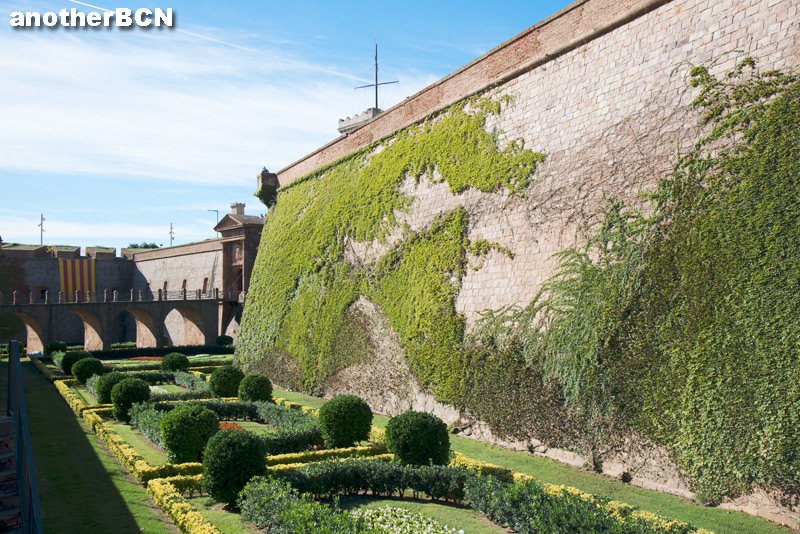
Moat and entrance
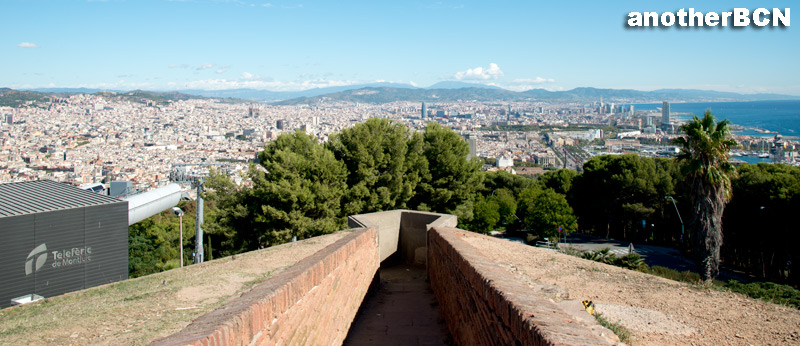
Some of the views over Barcelona
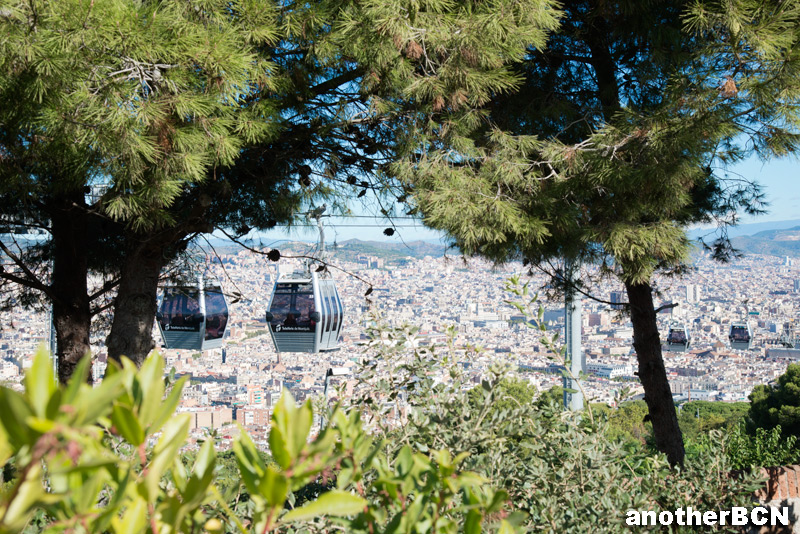
Montjuïc cable car
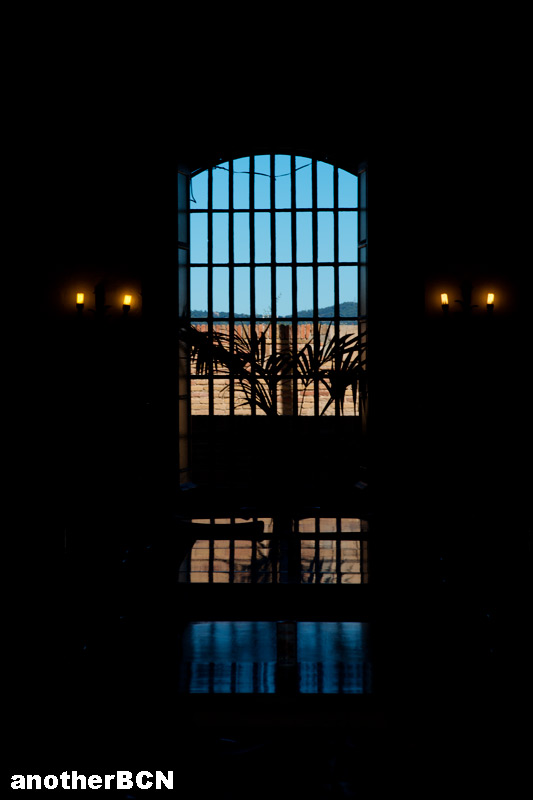
The restaurant
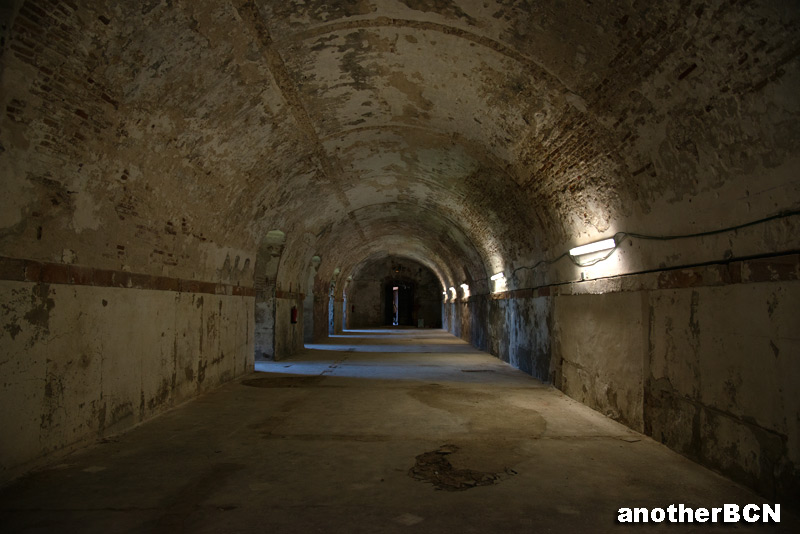
Access to the water tank, former army quarters
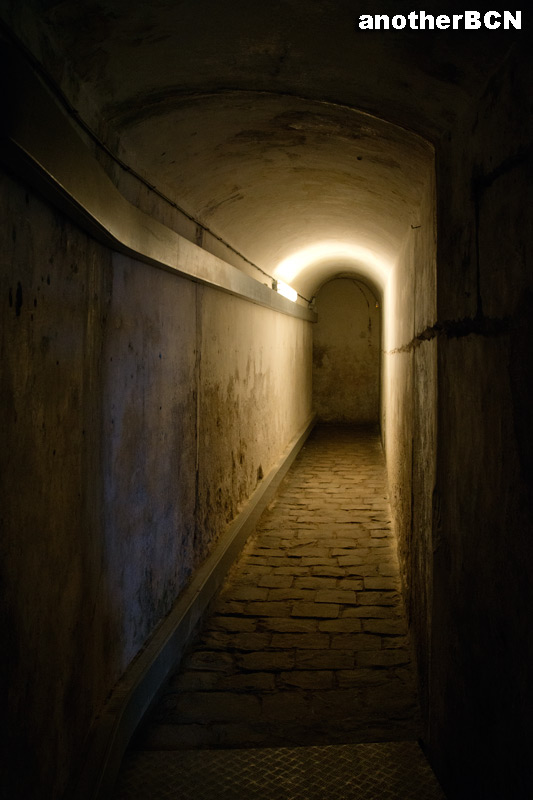
Corridor leading to the water tank
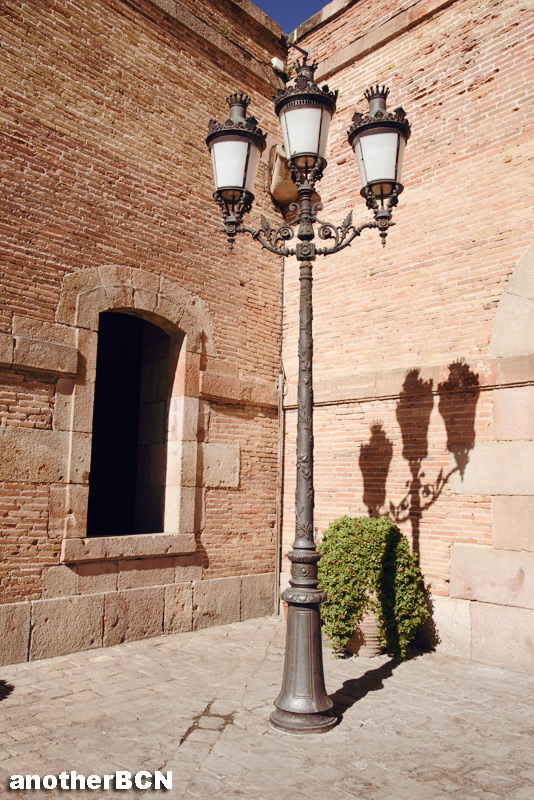
Shadows
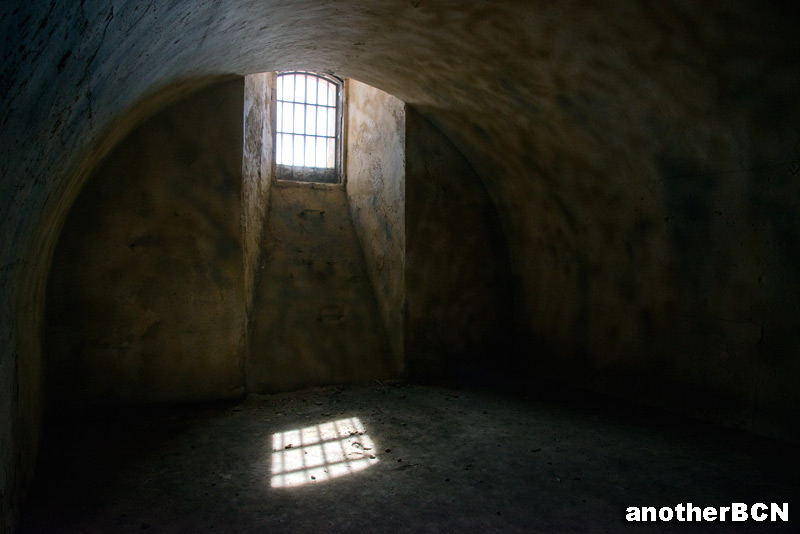
Dungeon cell
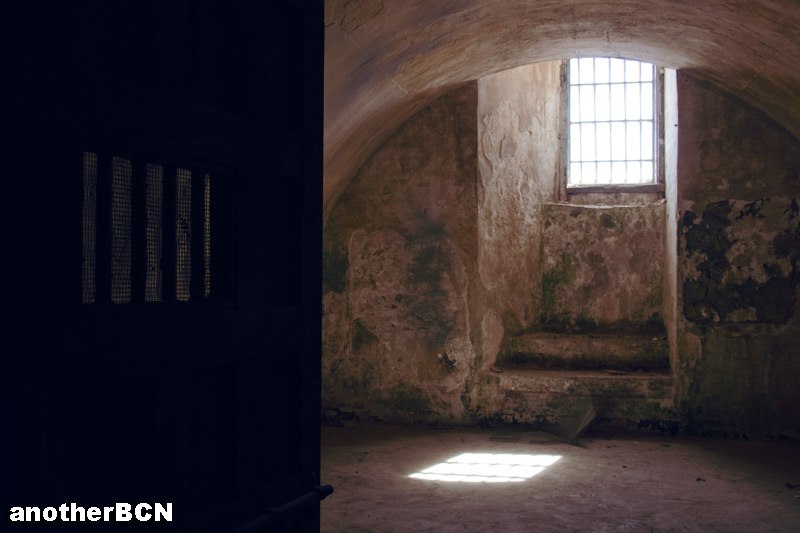
One of the cells in the castle dungeons
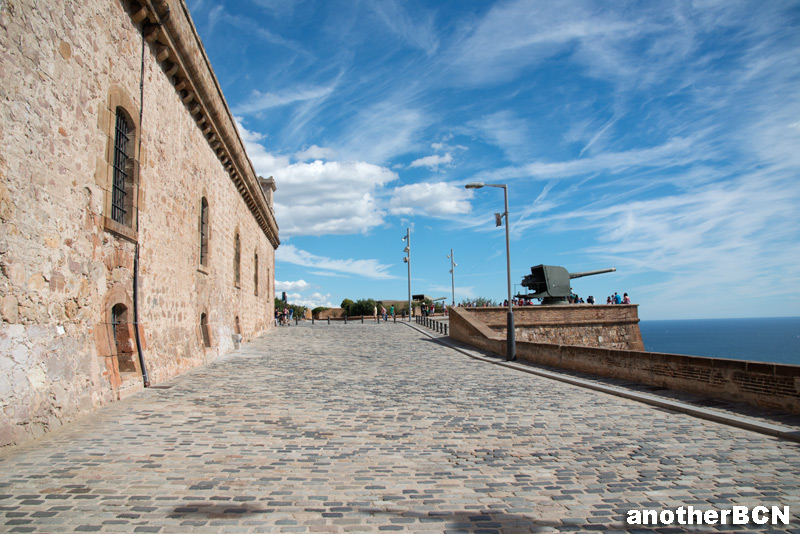
Walkway
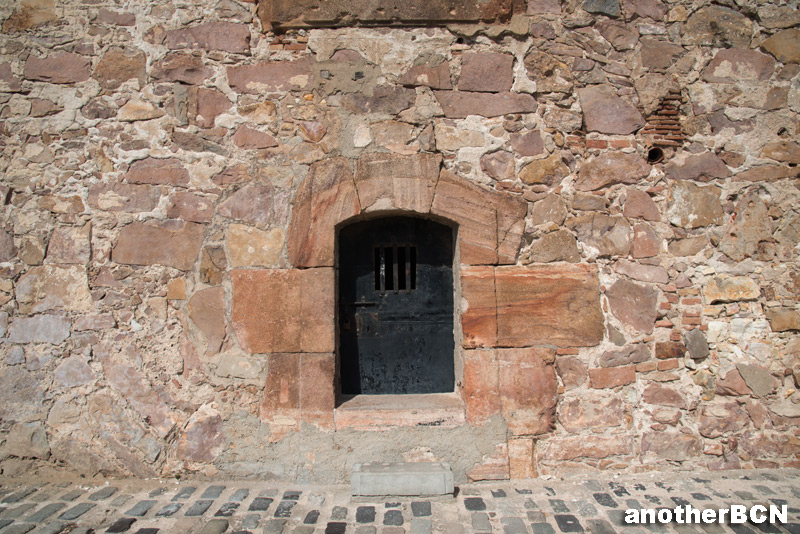
Entrance to the dungeons
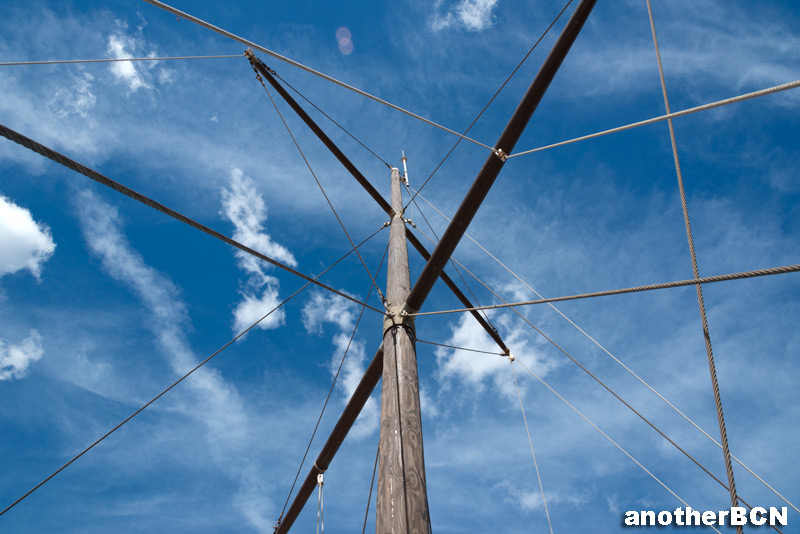
Colour code for the flags
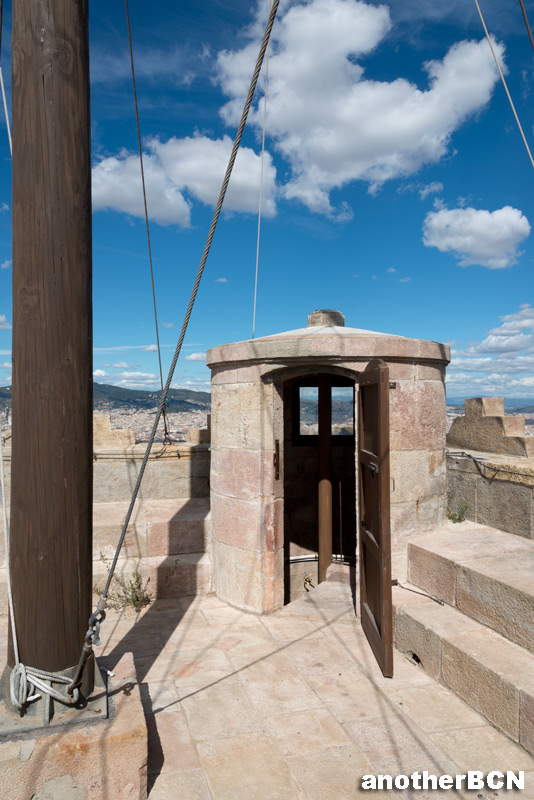
At the top of the watchtower
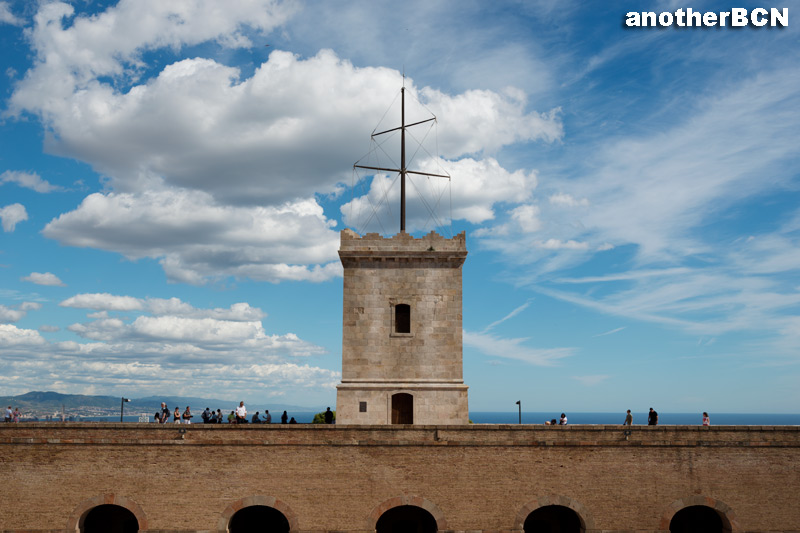
Watchtower
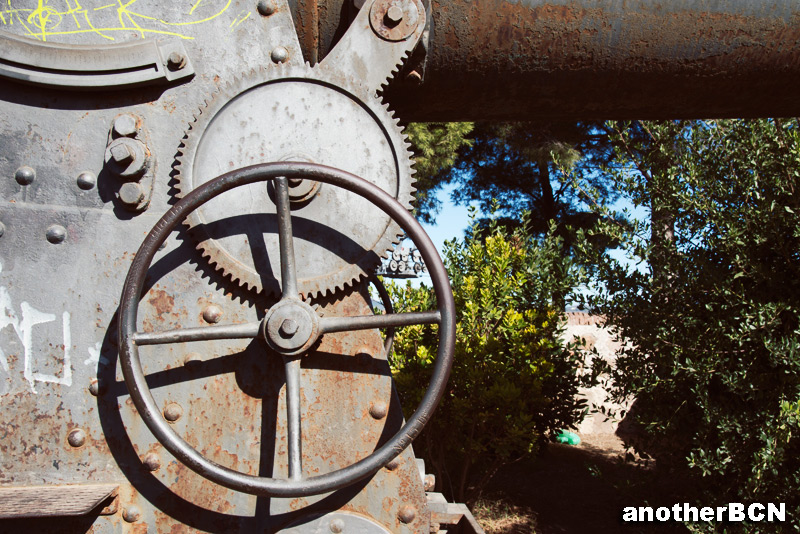
Cannon
Cannon
More photos of Barcelona on Instagram: @anotherbcn